About this post
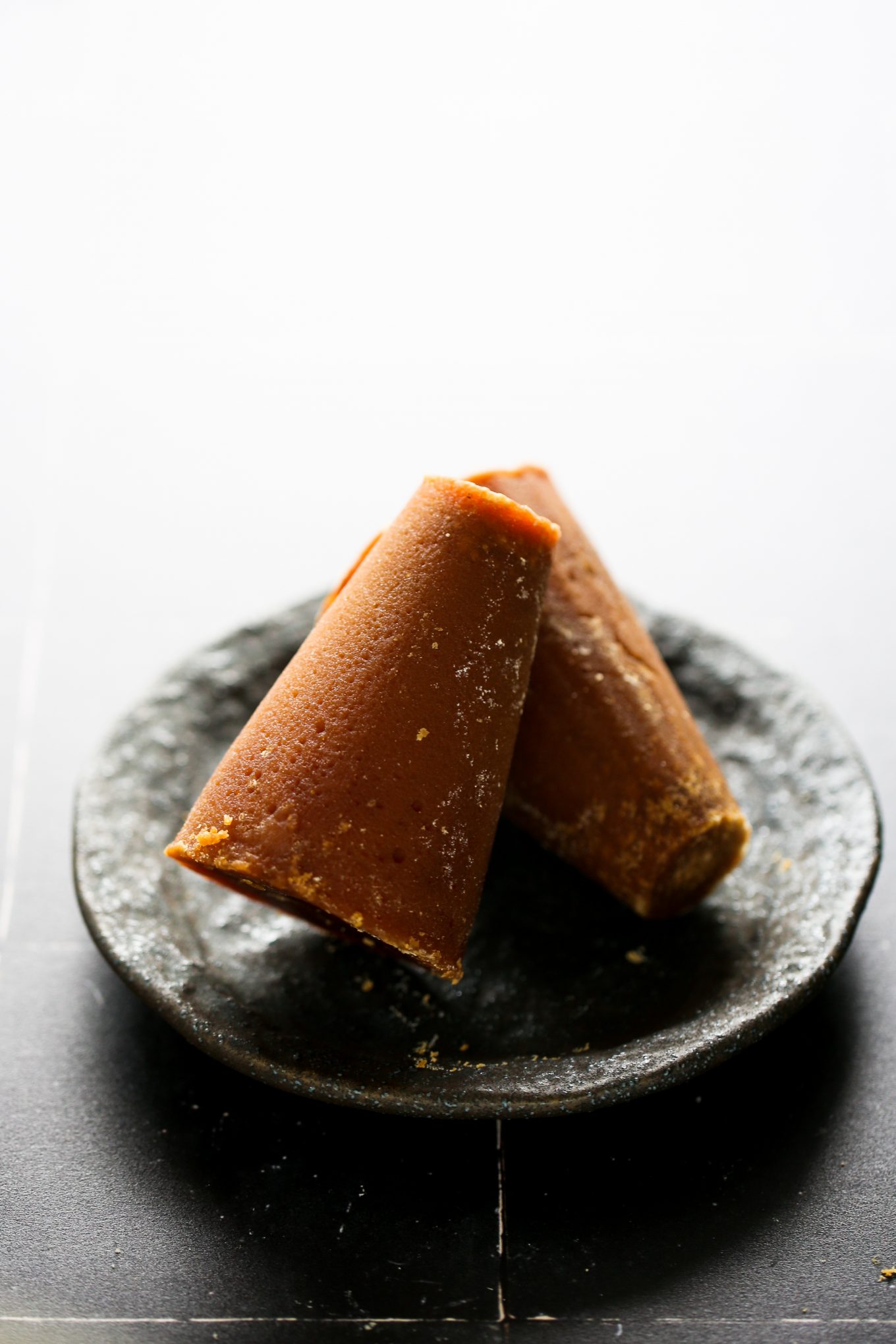
Piloncillo is Mexico’s original sweetener: pure, unrefined cane sugar with a deep, complex flavor that brown sugar can only dream of. It tastes like caramel, coffee, and a hint of smoke all in one cone-shaped block.
If you’ve never cooked with piloncillo before, this guide covers everything: what it is, how to pronounce it, how to grate and break it (because it’s rock-hard), the best substitutes if you can’t find it, and my favorite recipes that use it.
In my house growing up, we didn’t have maple syrup. We had piloncillo syrup on pancakes, and honestly, I still prefer it.
What Is Piloncillo?
Piloncillo is a raw, unrefined Mexican sweetener made from sugarcane. It is known for its deep, complex flavor, which is incomparable to regular sugars. Shaped like a cone of dark brown sugar, piloncillo is a staple in Mexican cooking, adding a unique touch to both sweet and savory dishes. Unlike processed sugars, piloncillo is pure and minimally processed, allowing it to retain its natural molasses flavor.
How Do You Say Piloncillo in English?
In English, piloncillo is often called Mexican brown sugar or Mexican raw sugar, though neither term fully captures its rich flavor. While it looks similar to brown sugar, the flavor is more complex, with hints of caramel, coffee, and a slight smokiness.
Piloncillo is pronounced pee-lon-SEE-yo. The stress is on the third syllable. In different regions of Latin America, the same product goes by other names: panela in Colombia, rapadura in Brazil, and panocha in some parts of Mexico.

What Makes Piloncillo Special?
Piloncillo is 100% unrefined cane sugar. The sugarcane juice is boiled down and poured into molds. Nothing is added or removed. This is why it has a deep, complex flavor that regular sugar and even brown sugar can’t match. Brown sugar is just refined white sugar with molasses added back in. Piloncillo never had the molasses removed in the first place.
Where Does Piloncillo Come From?
Piloncillo has been produced in Mexico since the start of the colonial era, when the Spanish introduced sugarcane cultivation. The arrival of this new crop also brought new techniques and tools for processing it.
Piloncillo plays an important role in traditional Mexican celebrations. It is essential in café de olla, buñuelos, champurrado, and atole, especially during Día de los Muertos, Christmas posadas, and other festive gatherings.
How Is Piloncillo Made?
- Extracting the juice. Freshly cut sugarcane is pressed to extract its juice.
- Heating and stirring. The juice is heated until it boils, reducing into a thick syrup. The leftover sugarcane fibers are often used as fuel to keep the process sustainable.
- Shaping and cooling. The syrup is poured into cone-shaped molds and left to cool, hardening into the familiar piloncillo shape.
This simple, traditional method preserves piloncillo’s natural flavors, setting it apart from refined sugars.
What Does Piloncillo Taste Like?
The flavor is more complex than brown sugar. It has notes of caramel, coffee, rum, and a slight smokiness. For me, it’s a flavor that transports me to Mexico, to village bakeries and the weekend breakfasts of my childhood.
In my house, we made pancakes for breakfast on Sundays, and instead of maple syrup, we served them with piloncillo syrup. It is one of those flavors that defines home.
How to Grate and Break Piloncillo
Piloncillo is rock-hard. Here are three ways to work with it:
- Box grater method (easiest for small amounts). Use the coarse side of a box grater. Hold the cone firmly and grate what you need. This gives you fine shreds that melt quickly into liquids or doughs.
- Microwave method (fastest for large pieces). Wrap the piloncillo cone in a damp paper towel and microwave for 15 to 20 seconds. It softens just enough to cut with a sharp knife. Don’t overdo it or it will start to melt.
- Melt into syrup (best for drinks and sauces). Place the whole cone or large chunks in a saucepan with a splash of water. Heat over medium-low, stirring occasionally, until it dissolves into a thick piloncillo syrup. Add cinnamon, cloves, or citrus peel for extra flavor.
Tip: I keep a jar of pre-grated piloncillo in my pantry so I can sprinkle it into oatmeal, coffee, or baking without having to grate a fresh cone every time. It stores well for months.
Piloncillo Substitutes: What Works and What Doesn’t
If you can’t find piloncillo, here are the best alternatives ranked by how close they get to the real thing:
| Substitute | Flavor Match | Best For | Amount per 1 Cup Piloncillo |
|---|---|---|---|
| Panela or rapadura | 95%. Nearly identical. Same process. | Any recipe calling for piloncillo | 1 cup (1:1) |
| Jaggery (gur) | 85%. Similar production, different cane variety. | Syrups, drinks, stews | 1 cup (1:1) |
| Muscovado sugar | 80%. Rich molasses flavor, finer grain. | Baking, drinks | 1 cup |
| Dark brown sugar | 70%. Close but simpler flavor. | Quick substitutions | 1 cup, packed |
| Light brown sugar + molasses | 65%. Two ingredients to mimic the complexity. | When you only have light brown sugar | 1 cup + 1 tablespoon molasses |
| Coconut sugar | 60%. Similar caramel notes but lighter. | Lighter dishes, baking | 3/4 cup |
| Regular white sugar | 30%. Sweetness only, no depth. | Last resort | 3/4 cup + 2 tablespoons molasses |
My recommendation: If you can find panela at a Latin grocery store, it is virtually the same thing as piloncillo. Jaggery (available at Indian grocery stores) is the next best option. Dark brown sugar works in a pinch but won’t have the same depth.
Piloncillo vs Brown Sugar vs Panela
These three sweeteners look similar but are made very differently:
- Piloncillo is 100% unrefined cane sugar. The sugarcane juice is boiled down and poured into molds. Nothing is added or removed. This is why it has deep, complex flavor.
- Brown sugar is refined white sugar with molasses added back in. It looks similar to piloncillo when grated, but the flavor is simpler and one-dimensional.
- Panela is the same as piloncillo, just from a different country. In Colombia, Venezuela, and parts of Central America, this unrefined sugar goes by panela. Same product, different name.
Bottom line: If a recipe calls for piloncillo and you can’t find it, panela is a perfect swap. Brown sugar works, but won’t taste the same.
Recipes with Piloncillo
Piloncillo is essential in many traditional Mexican recipes. Here are some of my favorites that showcase its rich, caramel flavor:
- Piloncillo Syrup (Miel de Piloncillo). The simplest way to use piloncillo. Melt it with water and cinnamon for a syrup that goes on pancakes, waffles, fruit, or ice cream. This is what we had instead of maple syrup growing up.
- Café de Olla Syrup. A concentrate made with piloncillo, cinnamon, and coffee. Add it to hot milk for an instant café de olla latte. One of the most popular recipes on this site.
- Mulled Wine with Piloncillo. Warm red wine spiced with piloncillo, cinnamon, and citrus. Perfect for the holidays.
- Pan de Muerto (Day of the Dead Bread). This traditional bread uses piloncillo for its distinctive sweetness.
- Oatmeal with Caramelized Bananas. Substitute grated piloncillo for brown sugar for a deeper, more complex caramel flavor.
- No-Knead Bread. A small amount of grated piloncillo in the dough adds subtle depth that regular sugar can’t match.
Classic Mexican dishes that use piloncillo: café de olla, champurrado, atole, buñuelos, capirotada (Mexican bread pudding), calabaza en tacha (candied pumpkin), camotes (candied sweet potatoes), and ponche navideño (Christmas fruit punch).
How to Store Piloncillo
- Whole cones. Store in an airtight container in a cool, dark place, such as a cupboard. Piloncillo lasts for years. It does not really expire. If it gets very hard, you can still grate it or dissolve it in warm water.
- Grated piloncillo. Keep in a sealed glass jar in the pantry. Use within a few months for the best flavor. I always have a jar of pre-grated piloncillo ready to go.
- Piloncillo syrup. Store in a glass jar in the refrigerator. It keeps well for several weeks.
Where to Buy Piloncillo
You can find piloncillo at Latin American grocery stores, in the Latin foods aisle of larger supermarkets like Walmart, Target, or HEB, or online through Amazon. Look for whole cones (usually sold in 8 oz or 1 lb packages) or pre-grated options.
Frequently Asked Questions
How to Grate and Break Piloncillo
Equipment
- 1 Box grater (coarse side)
Ingredients
- 1 piloncillo cone about 8 oz
Instructions
Box grater method (for small amounts)
- Hold the piloncillo cone firmly against the coarse side of a box grater. Grate what you need directly into your bowl or measuring cup.
- Grated piloncillo melts quickly into liquids, batters, oatmeal, or coffee. Use it anywhere you would use brown sugar for a deeper, more complex sweetness.
Microwave method (for larger pieces)
- Wrap the piloncillo cone in a damp paper towel. Microwave for 15 to 20 seconds. Do not overdo it or it will start to melt.
- Remove from the microwave and cut with a sharp knife into the size pieces you need. Use chunks in stews, sauces, or dissolve them in drinks while cooking.
Notes
information
Nutritional information of this recipe is only an estimate, the accuracy for any recipe on this site is not guaranteed.

Hi, I’m Ale Graf!
I’m a Mexican home cook based in Texas and the voice behind AleCooks and Piloncillo & Vainilla.
I create easy, family-friendly recipes with Mexican roots and a plant-forward mindset—always flexible and made to bring people together. I’m also the co-author of Yo Cocino Latino and love helping home cooks feel more confident in the kitchen.
Come say hi on Instagram—I’d love to hear what you’re cooking.