
About this salsa
I always have at least one salsa in my fridge. Sometimes it’s a salsa roja, sometimes a salsa verde. A taco without salsa is not a taco.
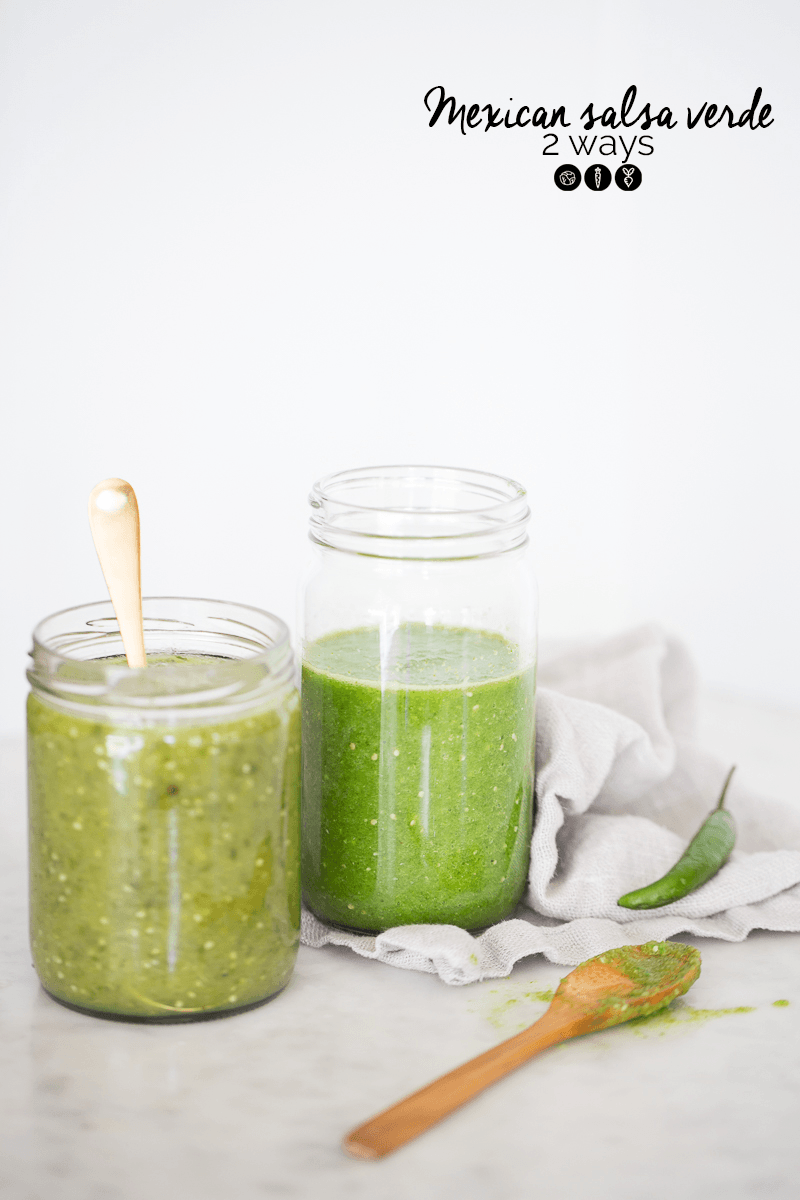
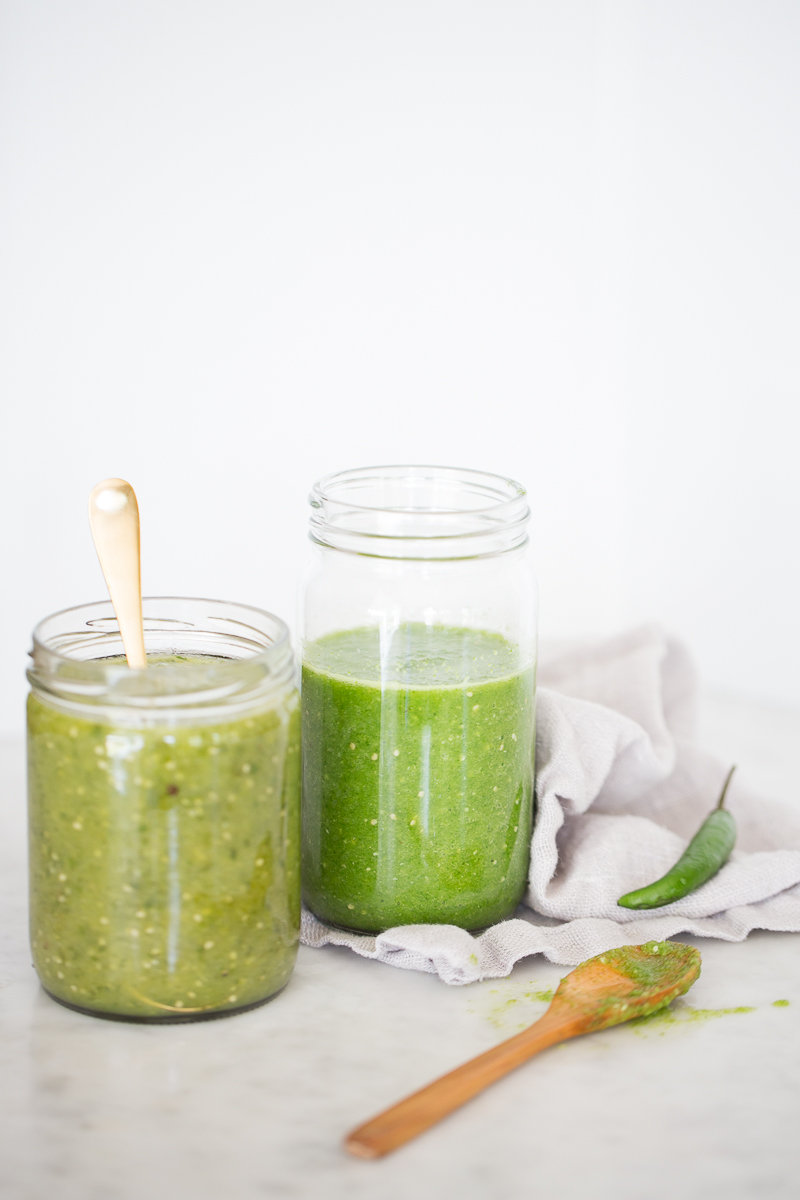
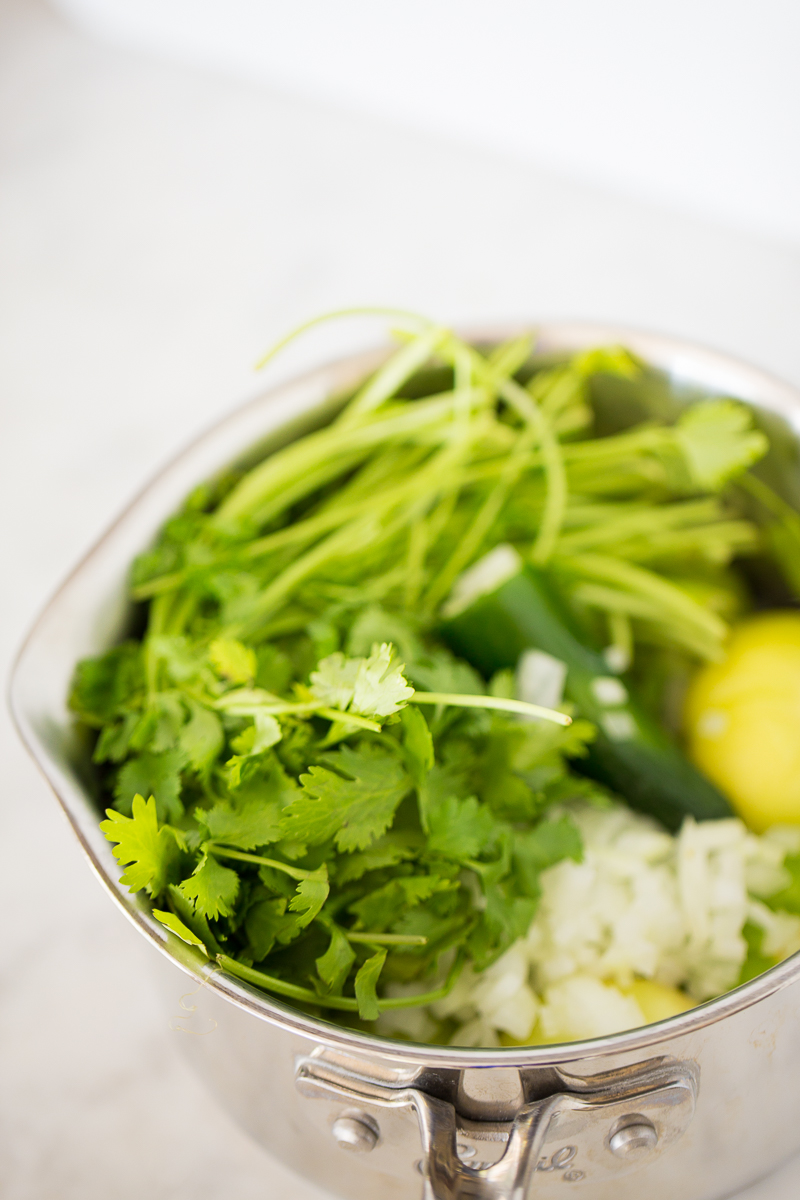
This recipe gives you two versions of salsa verde with the same five ingredients. The fresh one is bright, zesty, and raw (no cooking, five minutes). The cooked one is smoother and deeper in flavor. Both are perfect. Make the one that sounds good to you today, or make both and have options all week.
Ingredients
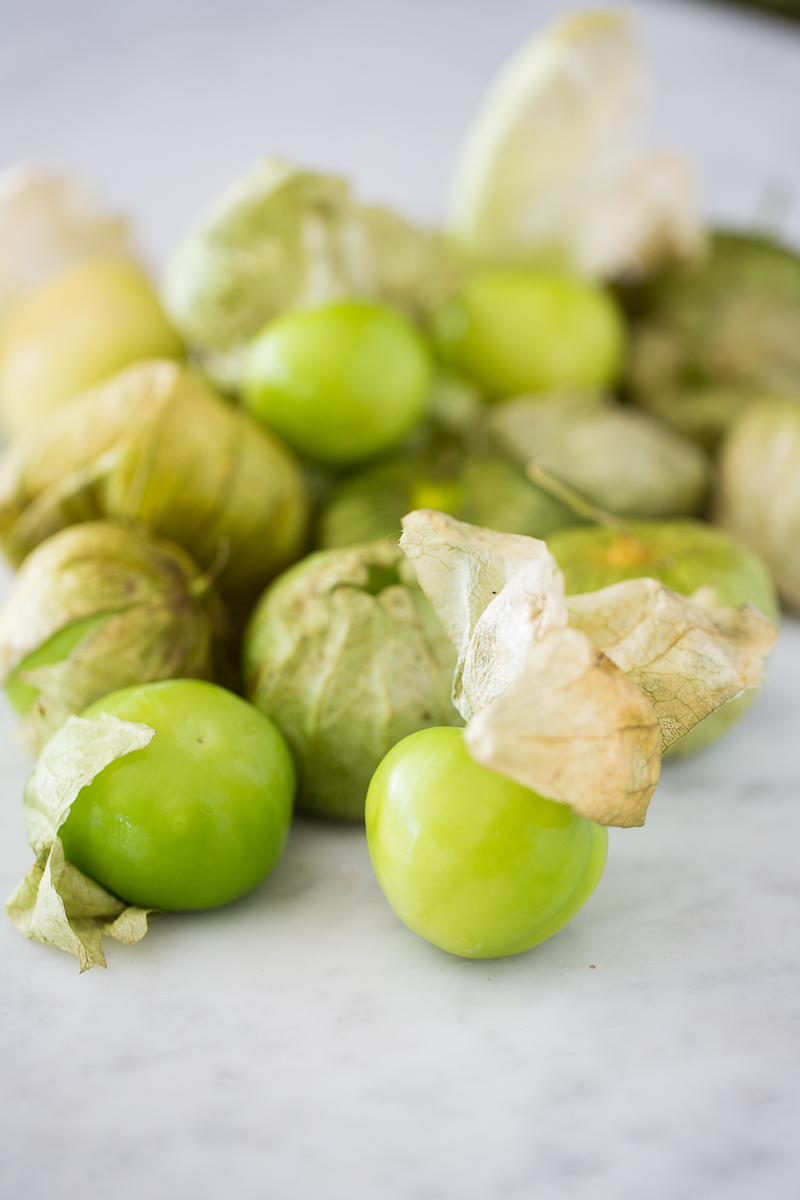
- Tomatillos
- Cilantro (stems and all)
- Serrano peppers
- White onion
- Salt
Fresh salsa verde (raw, no cooking)
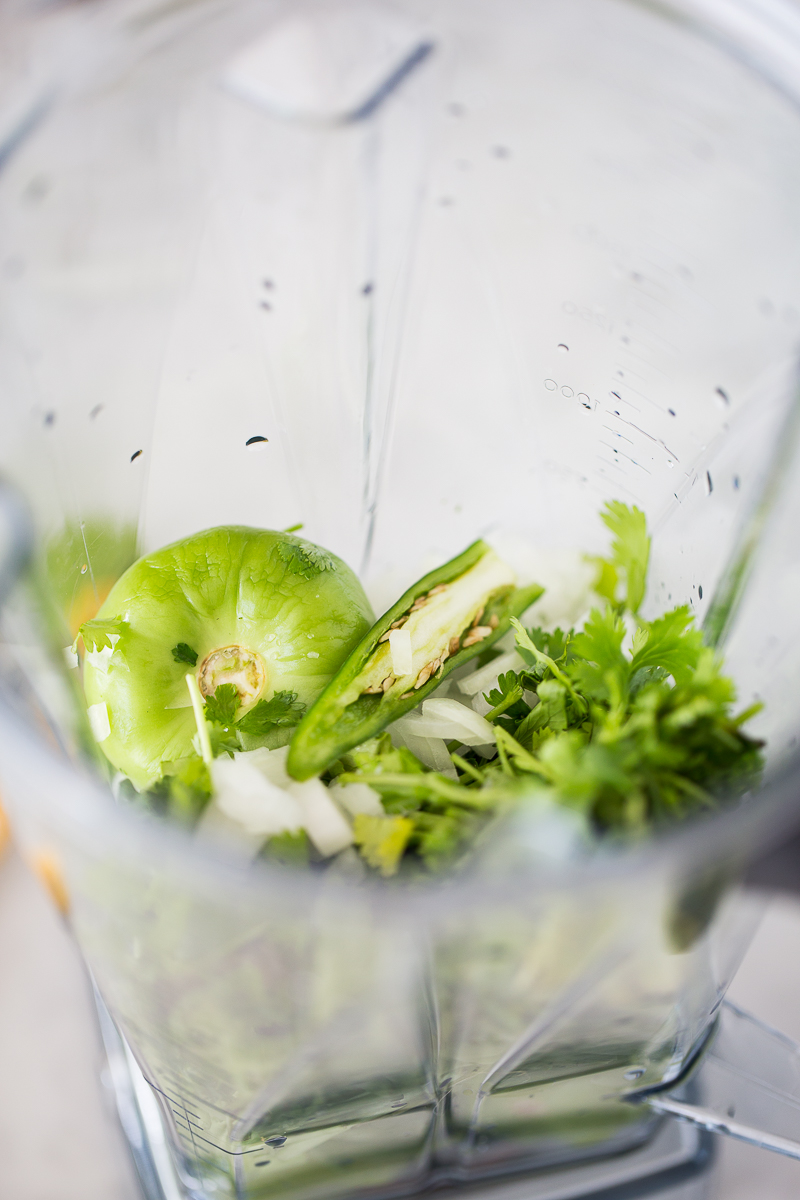
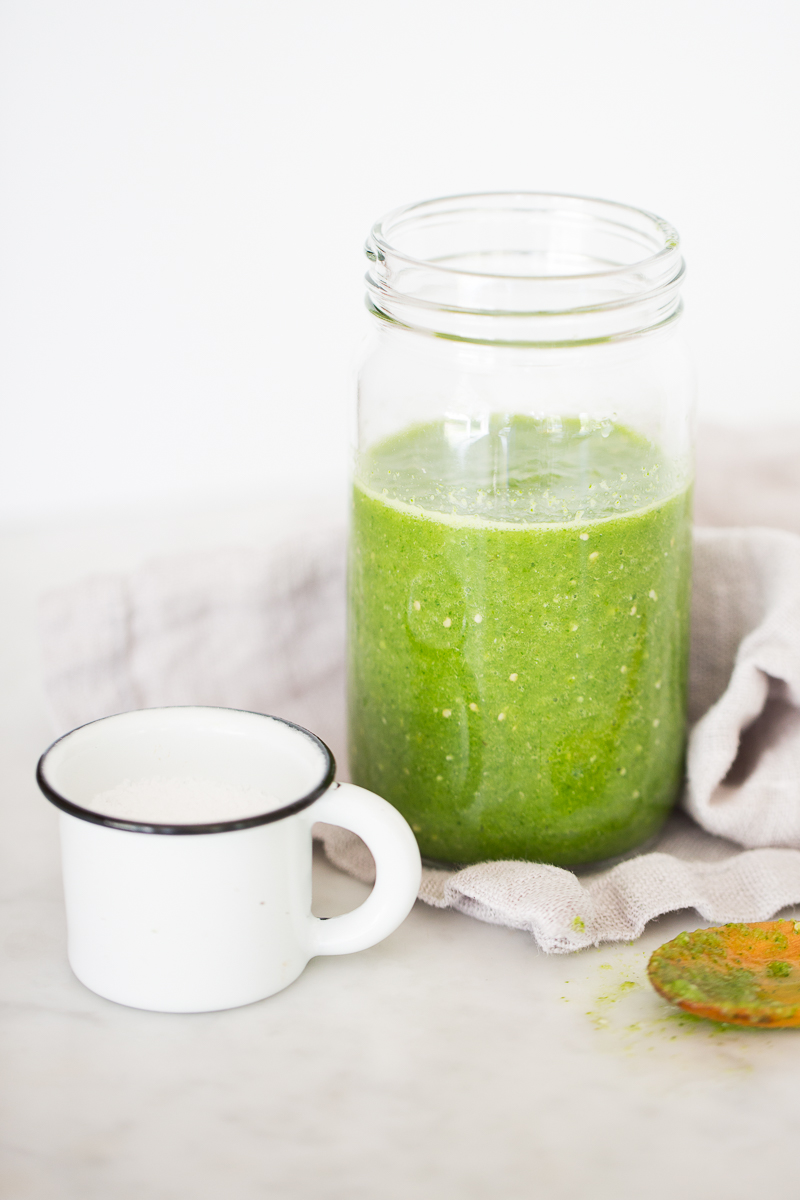
Blend the tomatillos, cilantro, serrano pepper, salt, and chopped onion until everything is combined. Taste and adjust with more salt or another piece of serrano. That’s it. Five minutes, done.
Cooked salsa verde (simmered)
Put the tomatillos, serrano, and onion in a small saucepan with a quarter cup of water. Cover and simmer for 10 to 15 minutes until soft. Blend with cilantro and salt until smooth. Taste and adjust.
What to eat with salsa verde
- Tostadas: finish each one with a spoonful.
- Sopes: there is no such thing as a perfect sope without a good salsa.
- Crispy potato tacos: go perfectly with both versions.
- Chilaquiles: use the cooked version to assemble your totopos.
- Chips and guac: add diced avocado to the fresh salsa and serve with corn chips.
Tips
- No high-powered blender? Chop the onion and tomatillos into chunks and roughly chop the cilantro before blending.
- Blender not moving? Add a tablespoon of water. I like to add cilantro at the end so stems don’t get caught.
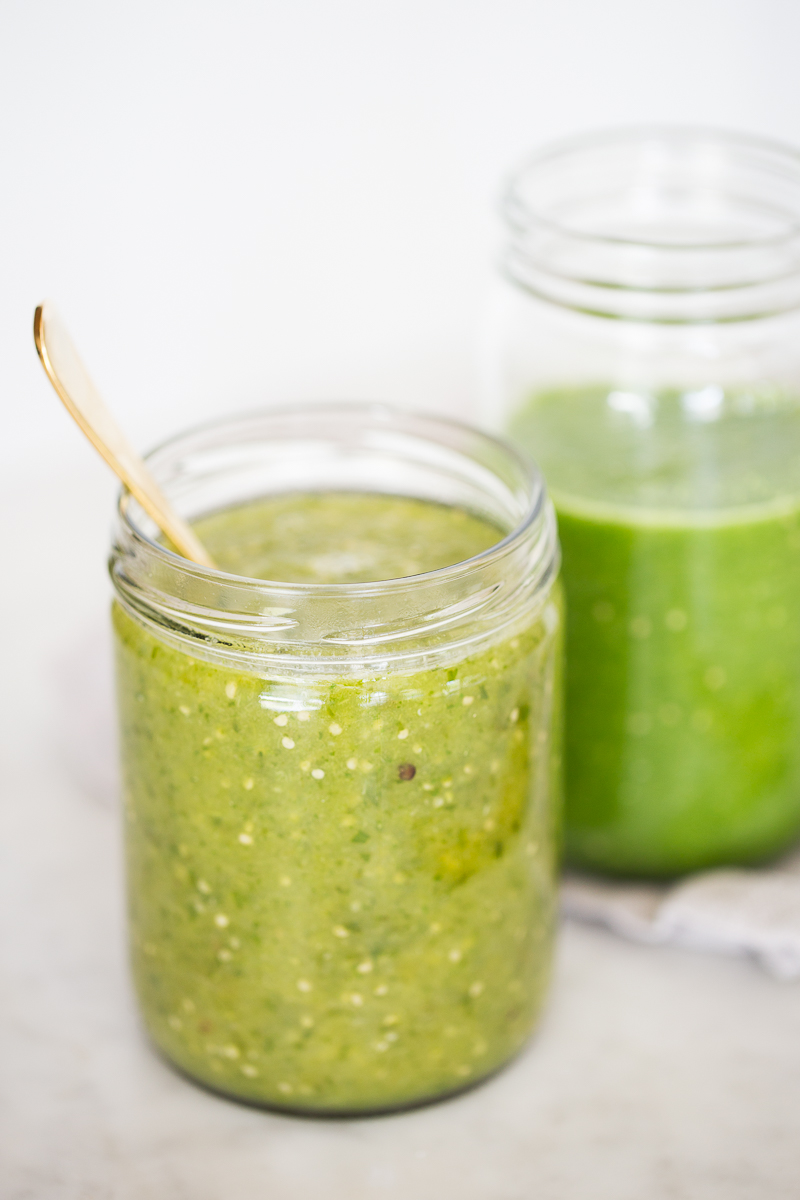
- Texture is up to you. Smooth or chunky, both are good. The fresh version is great chunky, the cooked one is better smooth.
- The difference between the two: The fresh one is brighter, more acidic, and has a raw tomatillo tang. The cooked one is mellower and smoother. Both keep in the fridge for about a week.
- Want smoky? Check my roasted tomatillo salsa verde instead. That one uses garlic charred on the griddle.
Mexican Salsa Verde, Two Ways: Fresh and Cooked
Equipment
- Saucepan (for cooked version)
Ingredients
- 5 to 7 tomatillos depending on size, husked and rinsed
- 1 cup fresh cilantro leaves and stems
- 1 to 2 serrano chili peppers
- ¼ cup chopped white onion
- ½ teaspoon salt
Instructions
Fresh salsa verde (raw):
- Put the tomatillos, cilantro, serrano pepper, onion, and salt in a blender.
- Blend until combined. You decide the texture: smooth or chunky.
- Taste and adjust. More salt, more chile, more onion. Make it yours.
Cooked salsa verde (simmered):
- Put the tomatillos, serrano, and onion in a small saucepan with a quarter cup of water.
- Cover and simmer for 10 to 15 minutes until everything is soft.
- Blend with the cilantro and salt until smooth.
- Taste and adjust seasoning.
Notes
- The fresh version is brighter and more acidic.
- The cooked one is mellower and smoother.
- Both keep in the fridge for about a week.
- Always use the cilantro stems. That’s where all the flavor is. Just trim the roots.
- One serrano is mild, two is medium. Remove seeds for less heat, or swap for jalapeños.
- No high-powered blender? Chop everything into chunks before blending. Add a tablespoon of water if it won’t move.
- Want a smoky version? Try my roasted tomatillo salsa verde instead.
Nutrition
information
Nutritional information of this recipe is only an estimate, the accuracy for any recipe on this site is not guaranteed.

Hi, I’m Ale Graf!
I’m a Mexican home cook based in Texas and the voice behind AleCooks and Piloncillo & Vainilla.
I create easy, family-friendly recipes with Mexican roots and a plant-forward mindset—always flexible and made to bring people together. I’m also the co-author of Yo Cocino Latino and love helping home cooks feel more confident in the kitchen.
Come say hi on Instagram—I’d love to hear what you’re cooking.