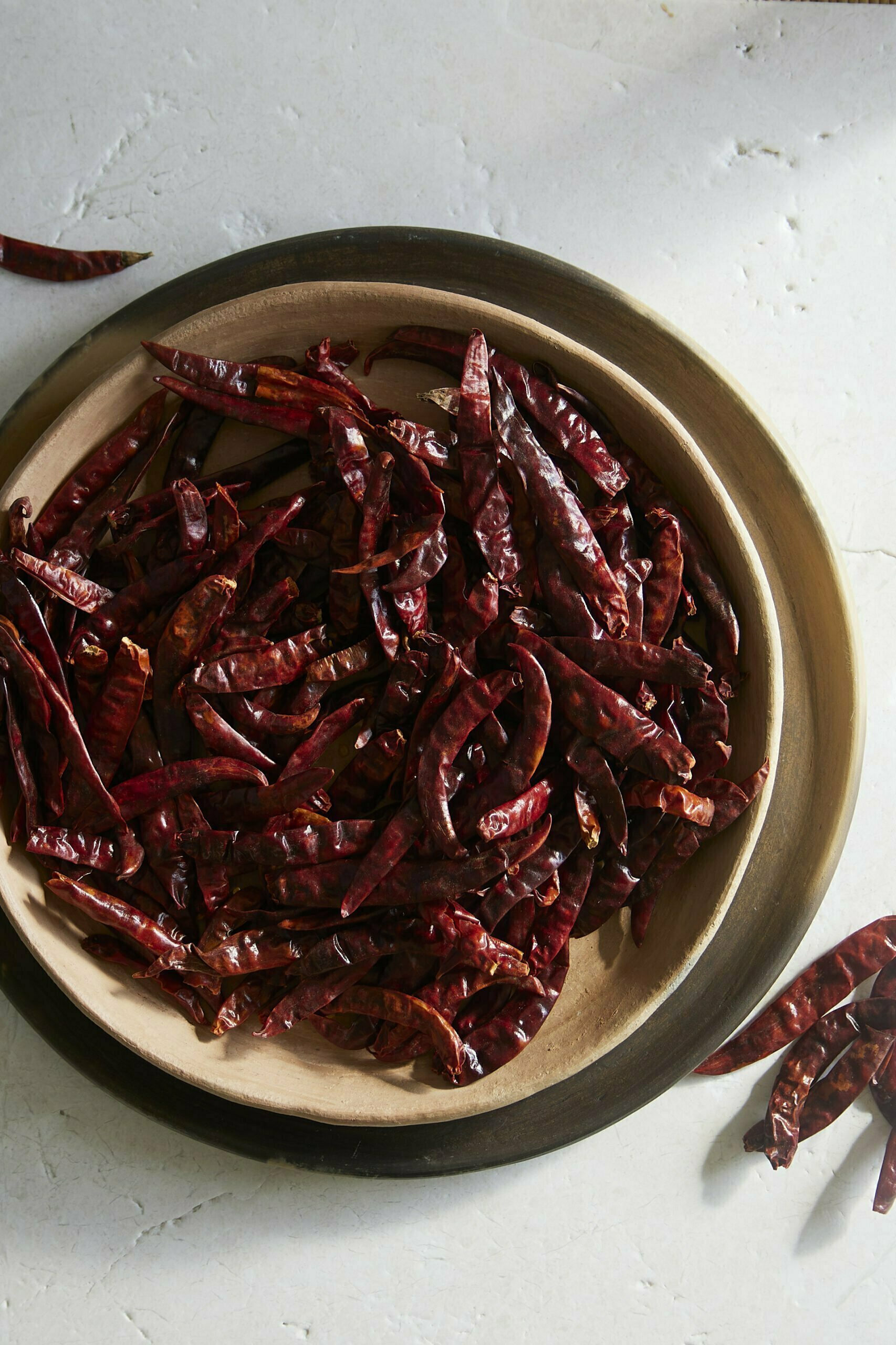
Chile de Arbol is a small, thin Mexican hot chili pepper, typically red. The peppers are naturally dried, and can be used whole, crushed, or ground.
What is chile de arbol?
Chile de Arbol is a Mexican type of red chili pepper that is commonly used in many dishes, especially when you want ot make your food spicier. It has a spicy, earthy flavor that is often used to make salsa, sauces, soups, and stews.
The chile de arbol pepper is a thinner Mexican pepper than a jalapeño pepper, and is usually dried and ground into a fine powder. It is also known by the name pico de pájaro -bird’s beak chile, tree chili or rat’s tail chile. Be sure not to confuse it with bird’s eye Thai chili.
How spicy is the chile de arbol?
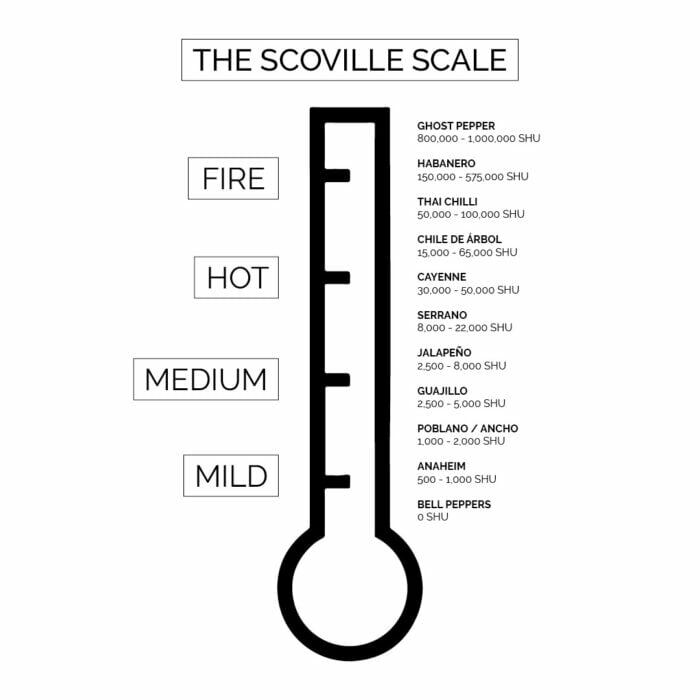
The Scoville scale measures the heat level of chili peppers, with higher ratings indicating a higher level of spiciness. Chile de arbol is considered a very hot pepper, with a Scoville rating of 15,000 to 30,000 units.
To give you an idea, chile de arbol’s heat level, it’s much hotter than a jalapeno pepper, which typically has a Scoville heat units of 2,500 to 8,000 units.
How do chiles de arbol taste like?
Chiles de arbol have a very distinct and intense flavor, which is described as smoky, earthy, nutty and a little bit fruity. When dried, Chile de arbol tend to lose some of their fruity flavor and gain a sharper, smokier flavor.
diffrent ways to use chiles de arbol
Salsa: One of the most common ways to use Chile de arbol is to make a salsa. I love to combien different dried chiles when making dried chile salsa, one of my favorite is salsa tlaquepaque. Use this salsa to finish sopes, enfrijoladas, migas or any of your favorite Mexican dishes.
Soups and stews: Chile de árbol can also be added to soups and stews as a part of the flavor base or just simmered with the rest of the ingredients to give it a spicy kick. Make birria or my birria ramen recipe which is to die for.
Chile oil: If you pour hot olive oil or vegetable oil, over the chilis you will get the most flavorful chili oil that can be used as a condiment or cooking oil.
Where to buy chile de árbol
In stores
- Mexican or Latin grocery stores. Best quality, freshest stock, lowest price. Usually sold in large bags. This is where I buy mine.
- Walmart, H-E-B, Kroger, Safeway. Check the international or Latin foods aisle. Most large chains carry them.
- Whole Foods, Sprouts. Usually in the spice section or bulk bins. Smaller bags, higher price.
Online
- Amazon. Search “chile de arbol dried.” Look for Mexican-grown chiles specifically.
- MexGrocer.com, SpiceJungle.com. Specialty online shops with high-quality dried chiles.
How to choose good ones
- Color: Bright to deep red. Avoid faded, dusty, or brown chiles.
- Texture: Dry but still slightly pliable. Cracked and brittle = flat flavor.
- Smell: Faint earthy, slightly smoky aroma. No mustiness.
- No holes: Small holes mean insect damage. Skip those bags.
How to store chile de árbol
- Dried (pantry): Sealed bag or airtight container, cool and dark. Lasts up to 1 year. Glass jars work best.
- Dried (freezer): Vacuum-sealed or freezer bag. Lasts up to 2 years.
- Rehydrated: Fridge for up to 4 days. Freezer for up to 6 months.
- Ground into powder: Airtight container, cool and dark. Best within 6 months.
If your dried chiles feel soft or damp, they’ve been exposed to moisture. Toss them.
How to toast chile de árbol
Toasting deepens the smoky, nutty flavor and makes the chiles more aromatic. Do this before rehydrating or making chili oil.
- Heat a dry skillet (cast iron or comal) over medium heat.
- Add the chiles in a single layer. Press flat with a spatula.
- Toast 30 to 60 seconds per side, turning frequently, until fragrant and slightly darkened.
- Remove immediately. They go from toasted to burnt in seconds.

If you burn them, start over. Burnt chiles taste bitter and acrid. No amount of seasoning will fix it. Better to waste a few chiles than ruin the whole dish.
How to rehydrate chile de árbol
Rehydrating makes the chiles soft enough to blend into smooth sauces, salsas, and adobos.
- Snip off the stems with kitchen shears. Shake out the seeds if you want less heat.
- Toast the chiles first (see above).
- Bring water to a boil. Turn off the heat, add the chiles, cover, and let sit 10 to 15 minutes until soft and pliable.
- Drain. Save the soaking liquid for sauces or broth. The chiles are ready to blend.
Ways to use chile de árbol
- Salsa. The #1 use. Toast and rehydrate, then blend with tomatoes, garlic, and salt. Combine with guajillo chiles for depth, or use solo for a spicier, simpler salsa. Try my salsa tlaquepaque or salsa de cacahuate.
- Salsa macha (chili oil). Toast the chiles, pour hot oil over them with garlic, peanuts, and sesame seeds. Crunchy, spicy, goes on everything. Try my peanut salsa macha or hibiscus salsa macha.
- Chili oil. Simpler than salsa macha. Hot oil over toasted chiles. Strain or leave the chiles in. Perfect for finishing roasted cauliflower or papas machas.
- Soups and stews. Drop 2 or 3 whole toasted chiles into Mexican lentil soup, birria, or bean soup. Remove before serving or blend into the broth.
- Adobo and marinades. Rehydrate and blend with tomatoes, vinegar, garlic, and spices. Works on grilled vegetables, chicken, pork, or tofu.
- Enchilada sauce. Add 1 or 2 chiles de árbol to your sauce base for extra kick without changing the flavor profile.
- Chile powder. Toast, cool, grind into fine powder. Sprinkle over fruit, sopes, enfrijoladas, or migas.
- Infused honey or vinegar. Drop a few toasted chiles into a bottle of honey or vinegar. Let infuse for a week. Spicy honey is incredible on pizza, cheese boards, or roasted sweet potatoes.
Recipes with chile de árbol
- Salsa Tlaquepaque. Bold salsa with coffee, guajillo, and chile de árbol.
- Salsa de Cacahuate. Creamy peanut salsa. Perfect for tacos and rice bowls.
- Peanut Salsa Macha. Crunchy, smoky chili oil with peanuts and sesame.
- Hibiscus Salsa Macha. Tart and spicy twist with dried hibiscus flowers.
- Crunchy Chili Oil with Roasted Cauliflower. Chile de árbol oil over roasted vegetables.
- Birria Tacos. Chile de árbol is part of the complex chile blend.
- Papas Machas. Crispy potatoes drizzled with salsa macha.
Health benefits
- Capsaicin. The compound responsible for the heat. Linked to anti-inflammatory effects and may help lower blood pressure.
- Vitamin A. Important for eye health and immune function. Dried chiles are a concentrated source.
- Vitamin C. Retained even in dried form.
- Iron and calcium. Small amounts that add up when chiles are a regular part of your cooking.
Frequently asked questions
More dried chile guides

Hi, I’m Ale Graf!
I’m a Mexican home cook based in Texas and the voice behind AleCooks and Piloncillo & Vainilla.
I create easy, family-friendly recipes with Mexican roots and a plant-forward mindset—always flexible and made to bring people together. I’m also the co-author of Yo Cocino Latino and love helping home cooks feel more confident in the kitchen.
Come say hi on Instagram—I’d love to hear what you’re cooking.