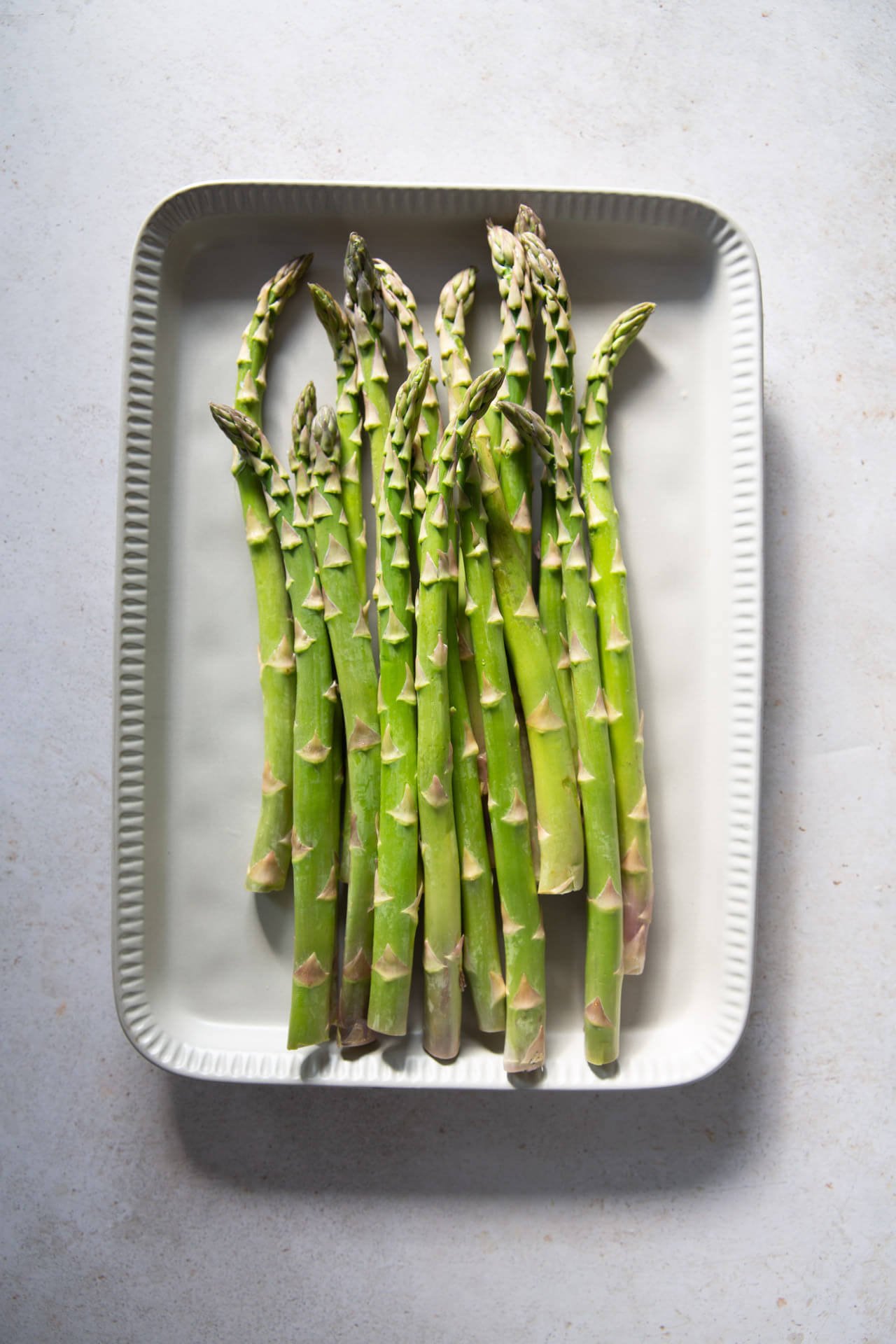
If you’ve never cooked asparagus before or yours always come out soggy, this post is for you. I’m covering everything: types, season, how to pick the best bunch at the store, how to actually cook them well, and how to store them so they don’t go to waste.
Asparagus is one of my favorite vegetables. It cooks fast, pairs with everything, and tastes incredible with just olive oil and salt. Once you get the hang of it, you’ll want to make it all the time.
Types of asparagus
- Green asparagus: The most common type and the one I use for almost everything — stir-fries, pasta, bowls, you name it. It has the most flavor and is available year-round.
- White asparagus: Grown underground without sunlight, which gives it a milder, more delicate flavor. Very popular in European cooking. If you find it, try it.
- Purple asparagus: Less common, slightly sweeter than green. Beautiful in salads and higher in antioxidants.
When is asparagus in season?
Asparagus is a spring vegetable. Peak season runs from March through June, depending on where you live. During those months, you’ll find it fresher, more tender, and cheaper at the store. Out of season, it’s still available, but the stalks tend to be drier and more fibrous.
Benefits of asparagus
Beyond tasting great, asparagus is packed with vitamin K, folate, vitamin C, and potassium. It’s low in calories and high in fiber, so it fills you up without weighing you down. Folate makes it especially good during pregnancy, and vitamin K supports bone health.
How to choose fresh asparagus
- Look for firm stalks that don’t bend easily.
- Color should be bright green with no yellowing.
- Tips should be tight and compact. If they’re open or falling apart, skip them.
- Choose spears of similar thickness so they cook evenly.
If the stalks feel limp or dry, they’re past their prime. Move on.
How to cook asparagus
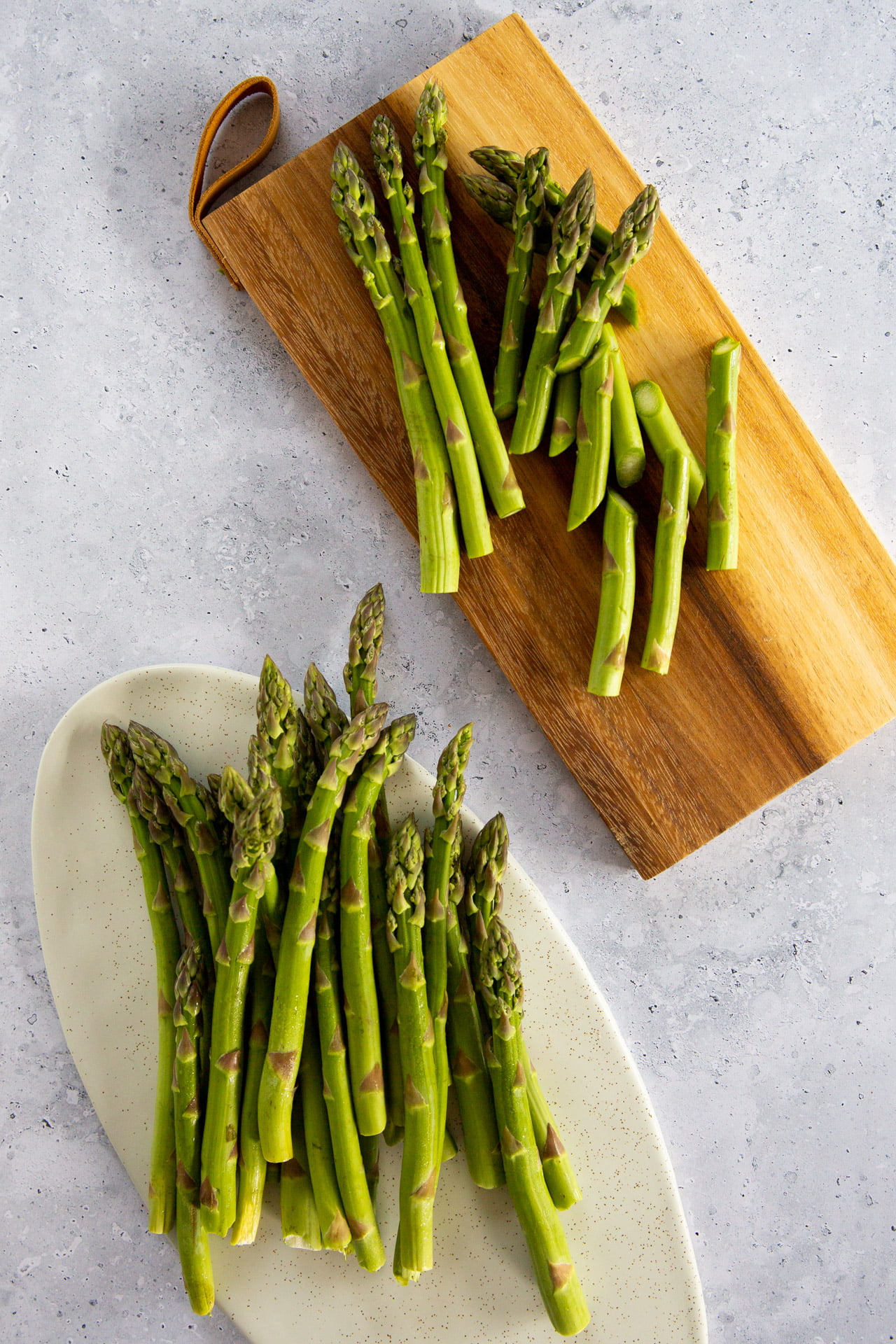
Before cooking, wash them under cold water and snap off the woody ends. The easiest trick: bend each spear with your hands, and it’ll break exactly where the tough part starts. No waste.
- Sautéed in a pan: My go-to for weeknights. Heat a pan with olive oil and cook the asparagus for 5-7 minutes. Add salt at the end so they don’t release too much water. They come out golden, crispy, and ready in under 10 minutes.
- Air fryer: Preheat to 400°F. Toss with olive oil and salt, arrange in a single layer (don’t crowd them), and cook 8-10 minutes, flipping halfway. Incredibly crispy.
- Roasted: Preheat oven to 400°F. Spread asparagus on a baking sheet, drizzle with olive oil, salt, and pepper. Roast 10-15 minutes. Perfect when you already have the oven going for something else.
- Grilled: Toss with olive oil, salt, and pepper. Grill 5-10 minutes until tender with nice char marks. Great for a dinner party or weekend cookout.
- Steamed: Place in a steamer basket over boiling water for 3-5 minutes. The simplest method — ideal if you’re adding them to a salad or another recipe.
I like to finish mine with a squeeze of lemon juice or a drizzle of simple vinaigrette.
Ideas for serving asparagus
- Asparagus and lentil salad — a complete meal with a bright vinaigrette.
- Pasta with asparagus and mushrooms — quick, fresh, and perfect for spring.
- Scrambled eggs or vegan omelets — sautéed asparagus with mushrooms and caramelized onions. Ideal for weekend brunch.
- Creamy asparagus soup — silky, comforting, and uses up the whole bunch.
- Rice bowls — asparagus on top of rice or quinoa with a creamy dressing is always a good idea.
How to store asparagus
Fresh (uncooked)
Treat them like flowers. Stand them upright in a glass with a bit of water, or wrap the ends in a damp paper towel and place in a bag. They’ll stay fresh for up to a week.
Cooked (leftovers)
Store in an airtight container in the fridge for up to 3 days. Next day, toss them into scrambled eggs, a salad, fried rice, or a quick pasta.
Frozen
If you bought too many and won’t cook them soon, freeze them. Blanch in boiling water for 2-3 minutes, then transfer to an ice bath. Drain well, place in a freezer bag, and they’ll last up to 6 months.
Frequently asked questions
How to Clean Asparagus
Equipment
- Kitchen towel or paper towels
Ingredients
- 1 bunch of fresh asparagus
- Cold water
Instructions
Rinse the asparagus.
- Hold them under cold running water and rinse well to remove any dirt or grit.
Dry them gently.
- Use a clean kitchen towel or paper towels to pat them dry.
Trim the tough ends.
- The base of the stalk is usually fibrous and tough.
- Option 1: Snap each spear by hand—it will naturally break where the tender part begins.
- Option 2: Use a knife to trim about 1–1.5 inches (2–3 cm) from the lighter-colored base.
Notes
information
Nutritional information of this recipe is only an estimate, the accuracy for any recipe on this site is not guaranteed.

Hi, I’m Ale Graf!
I’m a Mexican home cook based in Texas and the voice behind AleCooks and Piloncillo & Vainilla.
I create easy, family-friendly recipes with Mexican roots and a plant-forward mindset—always flexible and made to bring people together. I’m also the co-author of Yo Cocino Latino and love helping home cooks feel more confident in the kitchen.
Come say hi on Instagram—I’d love to hear what you’re cooking.