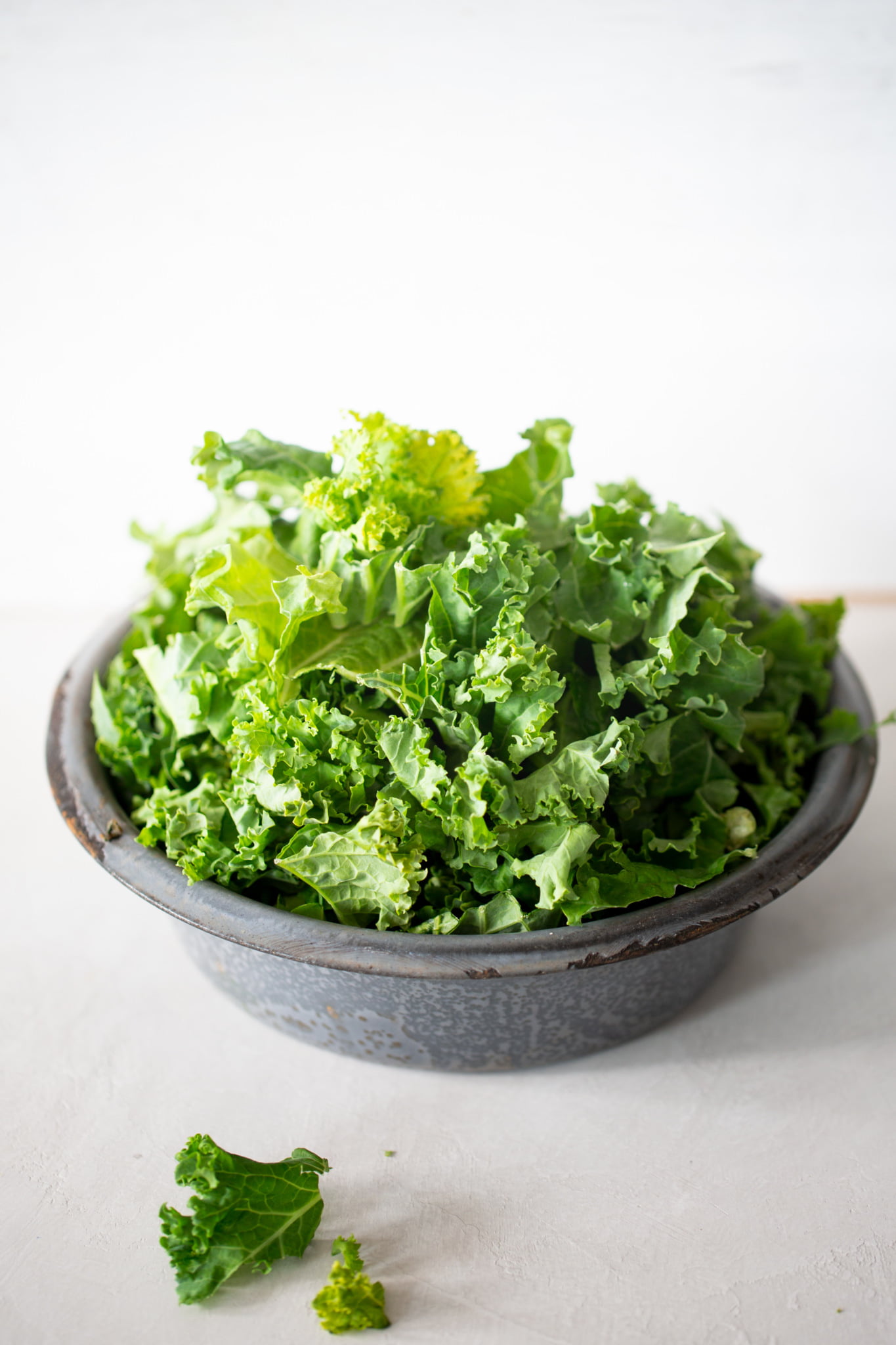
All about kale
Kale may feel like it takes too much work, or worse, too bitter to enjoy. But once you know how to wash, prep, and store it properly, you’ll actually look forward to using it. Prepped right, kale is tender, tasty, and incredibly easy to cook with.
When you have it ready to go, you can use it in a smoothie, massage it into a salad, or sauté it for tacos or soups. This step-by-step guide will help you get the best texture and flavor every time.
How to wash kale
- Fill a large bowl or salad spinner with cold water.
- Submerge the leaves and gently swish them around. Kale holds onto dirt and sand, especially in the folds.
- Let it sit for a minute or two, then lift the kale out. Don’t dump the water. The grit settles to the bottom.
- Repeat with fresh water if needed.
- Dry thoroughly with a salad spinner or pat dry with a clean towel. Dry kale lasts longer and won’t get slimy in storage.
Want to use soap? If you prefer an extra clean wash, add a tiny drop of Dr. Bronner’s Sal Suds to the water. It’s biodegradable and food-safe. Rinse very well afterward.
How to prep kale
- Remove the stems: fold each leaf in half lengthwise, then strip the stem with your hands or cut with a knife. Save stems for broth or pesto.
- Chop or tear: depending on how you’ll use it, tear into bite-size pieces or slice into ribbons.
- Massage (if eating raw): add a drizzle of olive oil and a pinch of salt. Use clean hands to massage for 1 to 2 minutes until the leaves turn darker and feel tender.
How to massage kale
How to store kale
Unwashed kale
- Wrap the bunch in a paper towel and place in a produce bag or silicone bag.
- Store in the fridge crisper drawer.
- Use within 5 to 7 days.
Washed and prepped kale
- Make sure it’s completely dry before storing.
- Line a container with paper towels or a clean cloth.
- Add the chopped kale, cover, and refrigerate.
- Use within 3 to 5 days for best texture and flavor.
Tips for buying kale
- Choose smaller leaves for freshness and a milder flavor.
- Look for crisp, green leaves without yellow spots or holes.
- Don’t toss the stems. Use them for juicing, broth, or pesto.
- If your family doesn’t love kale yet, start slow. Mix it with spinach or other greens, or add less kale and more veggies.
- For salads, I prefer green (curly) kale. For sautéing or baking, Tuscan kale (also called dinosaur or lacinato) works great.
How to Wash, Prep, and Store Kale
Ingredients
- 1 bunch kale curly, lacinato, or red kale, all work
- Cold water for washing
- Optional: olive oil and a pinch of salt for massaging raw kale
Instructions
- Fill a large bowl or salad spinner with cold water. Submerge the kale leaves and swish them around to loosen any dirt or sand. Let them sit for a minute, then lift out gently so the dirt stays at the bottom. Repeat if needed.
- Spin in a salad spinner or pat dry with a clean towel. This step is key if you want to store it without it turning soggy.
- Fold the leaf in half lengthwise and strip the stem away with your hand or cut it with a knife. Save the stems for veggie broth, pesto, or smoothies.
- Tear into bite sized pieces or slice into thin ribbons, depending on how you plan to use it.
- If eating raw, add a tiny drizzle of olive oil and a pinch of salt. Massage with clean hands for 1 to 2 minutes, until it softens and darkens in color.
Notes
- Unwashed kale: wrap in a paper towel or kitchen towel, tuck into a produce bag or container, and store in the crisper drawer. Keeps fresh for up to a week.
- Prepped kale: make sure it’s completely dry. Store in an airtight container lined with paper towels or a clean cloth. Best used within 3 to 5 days.
- No need to massage kale if you’re cooking it. Just prep and sauté.
- Freeze extra kale: blanch quickly, dry well, then freeze in bags for smoothies or soups.
- Use the stems! Add to pesto, smoothies, or freeze for later.
information
Nutritional information of this recipe is only an estimate, the accuracy for any recipe on this site is not guaranteed.

Hi, I’m Ale Graf!
I’m a Mexican home cook based in Texas and the voice behind AleCooks and Piloncillo & Vainilla.
I create easy, family-friendly recipes with Mexican roots and a plant-forward mindset—always flexible and made to bring people together. I’m also the co-author of Yo Cocino Latino and love helping home cooks feel more confident in the kitchen.
Come say hi on Instagram—I’d love to hear what you’re cooking.