About this recipe
If you grew up in Mexico, you grew up eating chamoy on mango, on cucumber, on candy, on everything. It’s one of those flavors that’s impossible to describe to someone who hasn’t tried it: sweet, sour, spicy, and salty all at once.
The problem with most store-bought chamoy is its ingredient list: artificial colors, high-fructose corn syrup, preservatives, and sodium benzoate. It doesn’t have to be that way.
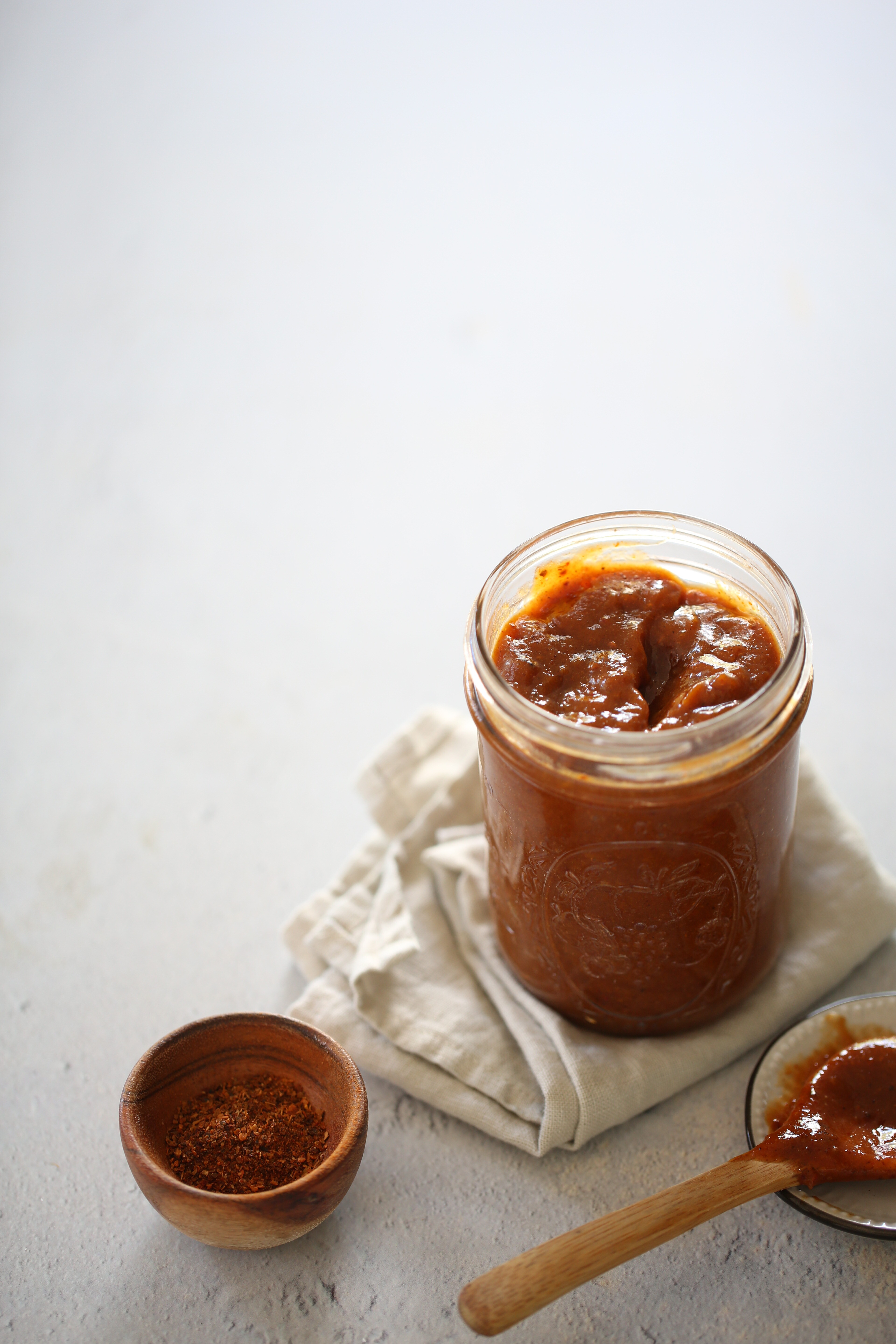
This homemade chamoy sauce recipe uses real dried fruit, ancho chile, lime juice, and apple cider vinegar. It takes about 20 minutes, most of which is just soaking time. You blend it, taste it, adjust it, and you’re done — with a chamoy that’s better than anything from a bottle.
Why will you love this recipe
- No artificial anything: no corn syrup, no artificial colors, no preservatives. Just real ingredients.
- Ready in 20 minutes: most of the time is hands-off soaking. Active work is about 5 minutes.
- Fully customizable: adjust the spice, sweetness, and sourness to your exact taste.
- Makes a big batch: keeps in the fridge for up to 2 weeks (or freeze it for months).
- Versatile: use it on fruit, in drinks, as a rim paste, on candy, with chips — the list doesn’t end.
What is chamoy sauce?
Chamoy is a Mexican condiment that’s sweet, sour, salty, and spicy all at once. It’s made from a base of dried fruit (usually apricot, mango, or plum), chile, lime, and sugar.
You’ll find it everywhere in Mexico — drizzled over street fruit carts, swirled into mangonadas, rimming michelada glasses, and drizzled on candy and chips. It’s one of the most iconic flavors in Mexican street food culture.
Chamoy has roots in Asia. The name likely comes from see mui (Chinese), xí muôi (Vietnamese), or kiamoy (Tagalog) — all words for salted, preserved stone fruits. These flavors made their way to Mexico (possibly via Chinese or Filipino immigrants) and evolved into what we know as chamoy today: a thick, bold sauce spiked with chile and lime that’s uniquely Mexican.
It comes in many forms — as a sauce, a paste, a powder, or even a candy coating. This recipe makes the sauce version, which is the most versatile.
What does chamoy taste like?
- Sweet: The fruit base (apricot, mango, or plum) gives chamoy its sweet undertones.
- Sour: Lime juice or citric acid adds a tangy, zesty kick.
- Spicy: Chili peppers add heat, though the level of spiciness can vary from one chamoy to another.
- Salty: Salt balances out the other flavors and heightens the overall taste experience.
ingredient Notes
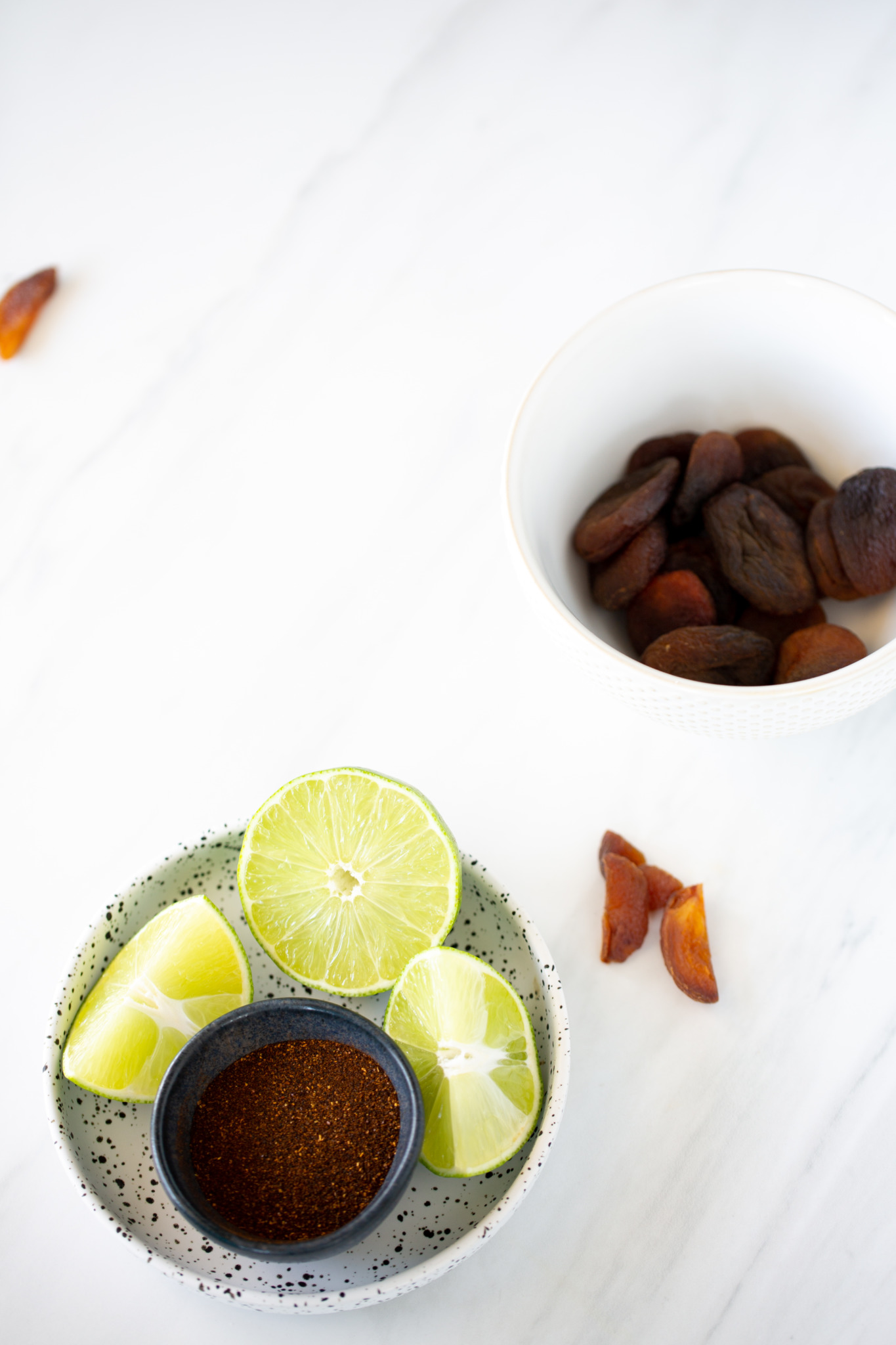
- Dried apricots: the base of the sauce. Choose unsweetened ones for the best balance. You can also use dried prunes, dried mango, or a mix of all three.
- Ancho chile powder. You can grind whole dried ancho chiles (remove seeds and stems first) or use store-bought ancho powder. For more heat, add chile de árbol.
- Lime juice: Fresh lime is better than lemon here.
- Apple cider vinegar: adds another layer of tang and helps preserve the sauce. Substitute with rice vinegar if needed.
- Granulated sugar: balances the acid and heat. Coconut sugar also works.
Optional ADD-Ins
- Dried hibiscus flowers: add tartness and a deep red color. Very traditional.
- Tamarind paste: adds a funky, sour-sweet depth. Common in store-bought chamoy.
- Dried mango or prunes: mix with apricots for more complexity.
How to make chamoy?
- Soak the apricots in the boiling water.
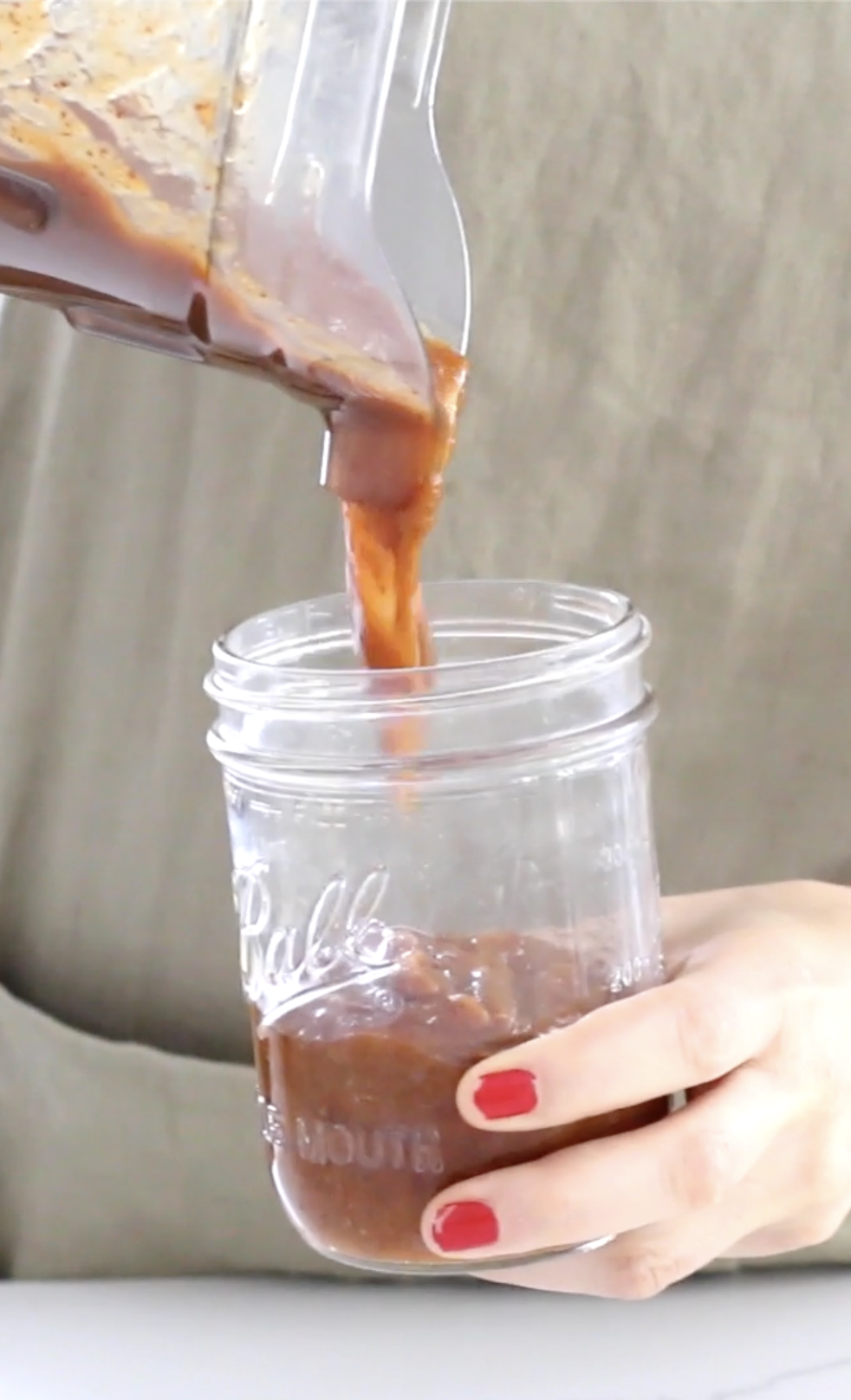
- Blend apricots, soaking water, and the rest of the ingredients.
- Taste and adjust the flavor to your liking.
How to eat chamoy sauce?
Chamoy goes with almost everything. Here are the best ways to use it:
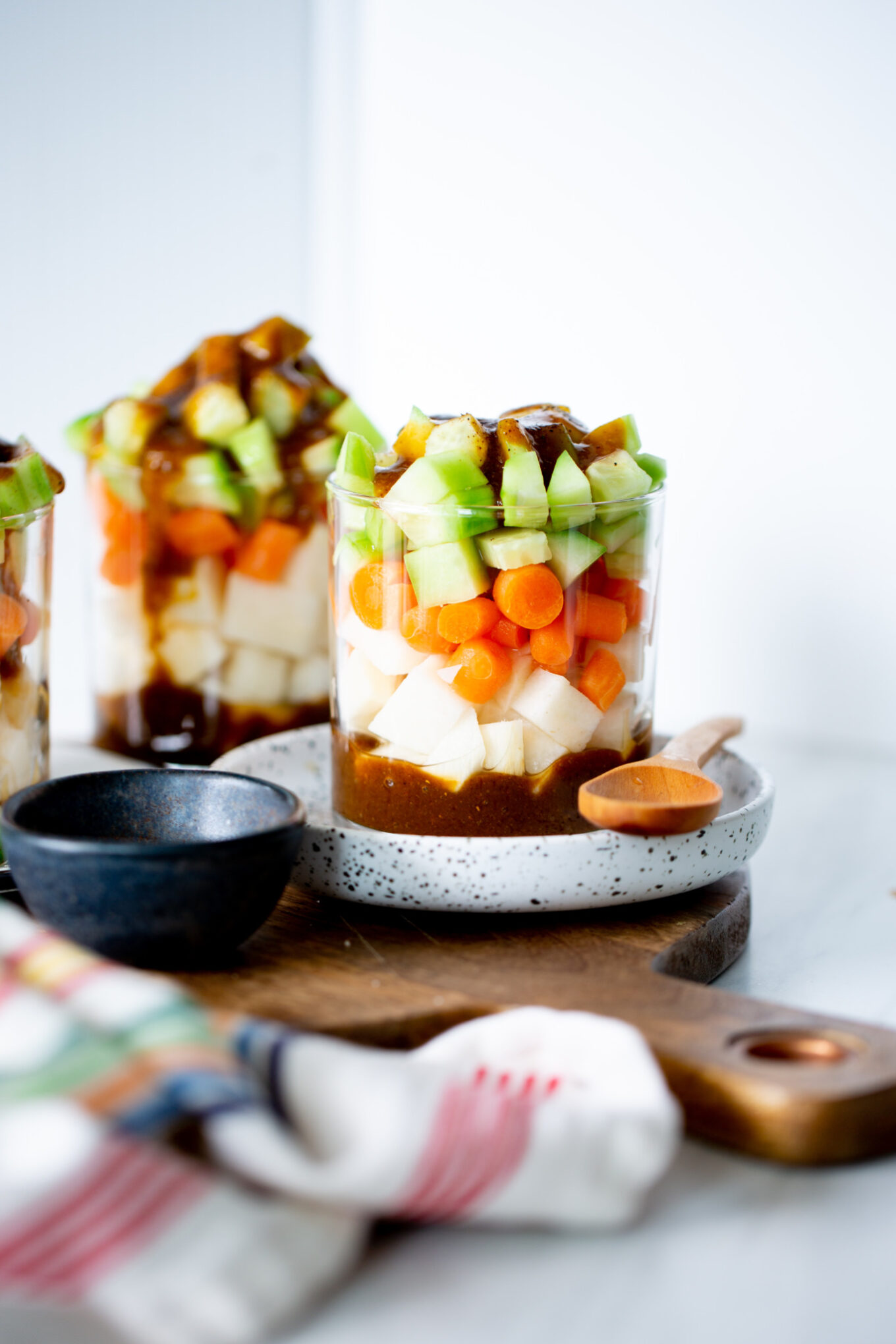
- Fresh fruit: drizzle over mango, watermelon, pineapple, cucumber, jícama, or apple slices. This is the most classic way to eat chamoy.
- Mexican snack cups: carrot, cucumber, and jícama sticks with chamoy, lime, and Tajín. Sometimes with Fritos or any other chip.
- Mangonadas: a frozen mango drink layered with chamoy, lime, and chile powder. (Try my mangonada recipe.)
- Rim paste for drinks: spread chamoy on the rim of a glass, dip it in Tajín (I use homemade Tajín), and fill with your margarita, michelada, or chelada.
- Raspados (shaved ice): drizzle chamoy over shaved ice with fresh fruit and chile powder.
- Candy: toss gummy bears, peach rings, or any sour candy in chamoy and Tajín. Seriously addictive.
- Chips and snacks: drizzle over Fritos, Takis, or Tostitos with cucumber, lime, Tajín, and spicy peanuts.
- Paletas: pour over fruit popsicles (mango, strawberry, or hibiscus ones are incredible).
- On savory food: use it as a glaze for grilled chicken or shrimp, or drizzle on sushi (yes, this is a thing in Mexico City).
How to store Homemade Chamoy
- Refrigerator: transfer to a clean glass jar with a tight lid. Keeps for 2–3 weeks. The flavor actually gets better after a day or two.
- Freezer: pour into ice cube trays, freeze, then transfer cubes to a freezer bag. Keeps for up to 3 months. Thaw in the fridge or at room temperature.
- The sauce may thicken in the fridge. Just stir or add a splash of water to loosen it up.
- Signs it’s gone bad: mold, off smell, or fermented/fizzy texture. Toss it.
Common mistakes when making chamoy
- Using sweetened dried apricots: they add too much sugar and throw off the balance. Always use unsweetened.
- Not tasting and adjusting: chamoy is all about balance. You MUST taste it after blending and tweaking the lime, sugar, salt, and chile until it’s right for you.
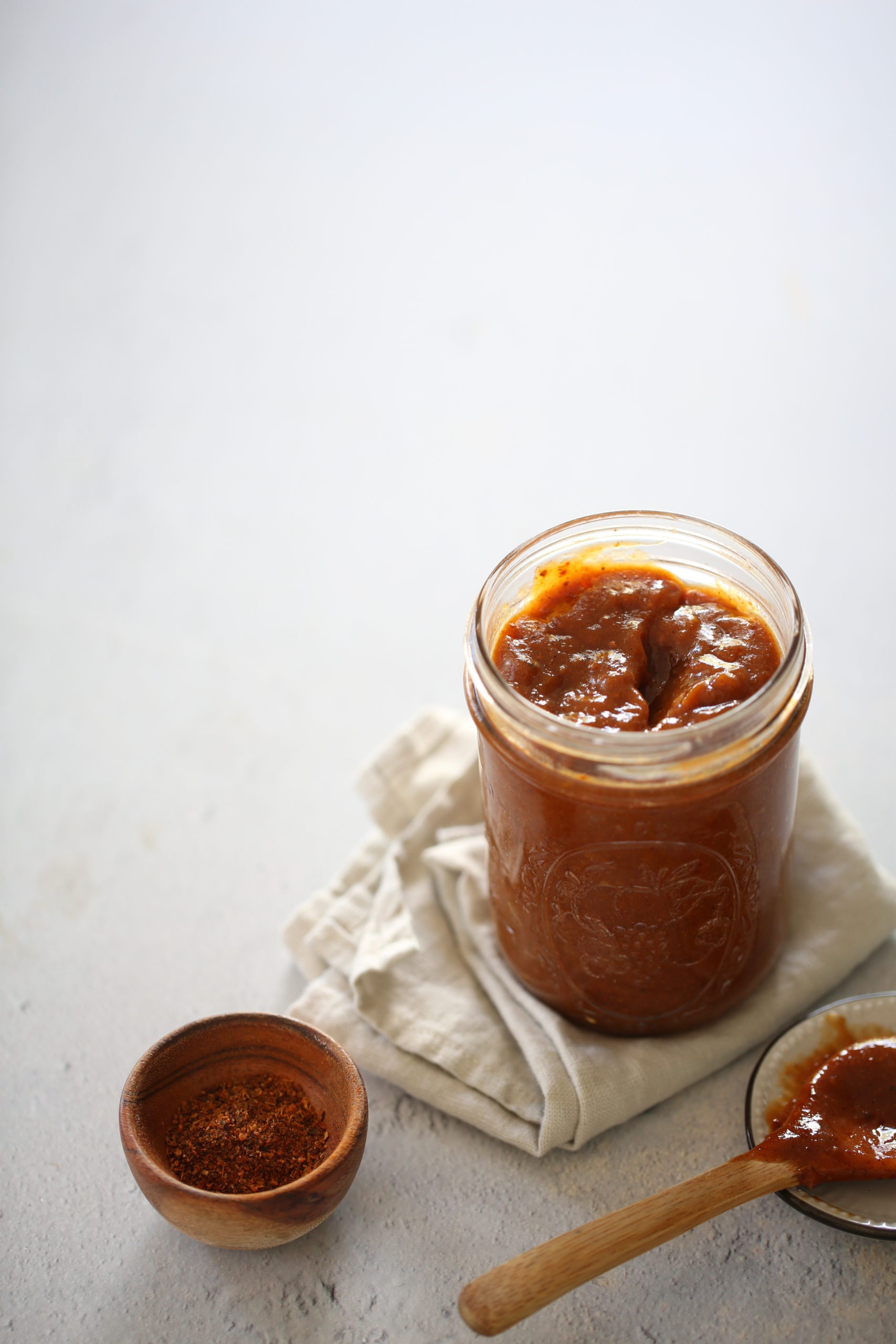
- Making it too thin: it should coat the back of a spoon. If it’s watery, you’ve added too much liquid. You can always think it later, but you can’t unthink it.
- Skipping the lime: lime is essential. It’s what makes chamoy chamoy. Don’t substitute with lemon if you can avoid it.
- Using the wrong chile: ancho is mild and smoky, which is ideal for a balanced chamoy. Cayenne or habanero will make it too hot too fast. If you want more heat, add chile de árbol gradually.
Frequently asked questions
Variations
- Hibiscus chamoy: add ¼ cup dried hibiscus flowers to the soaking step. It gives a deep red color and extra tartness. Here is my recipe for hibiscus chamoy.
- Tamarind chamoy: add 1 tablespoon of tamarind paste to the blender. This makes it closer to the flavor of store-bought chamoy.
- Mango chamoy: replace half the apricots with dried mango for a tropical, sweeter version.
- Extra-spicy chamoy: add 2–3 dried chile de árbol (stemmed and seeded) to the soaking water along with the apricots. Blend everything together.
- Chamoy paste (thicker): use only 1 cup of soaking water instead of 1½. This makes a thicker paste that’s perfect for coating candy apples or rimming glasses.
Why is it better to make Mexican chamoy at home?
Homemade sauce is always the best option, as you can control the ingredients that go into it. Store-bought chamoy sauce may not be very healthy due to the presence of artificial colors, preservatives, xanthan gum, high-fructose corn syrup, or sodium benzoate.
However, this homemade sauce recipe is a healthier alternative because it contains none of these ingredients.
How to Store Homemade Chamoy
- Refrigerator: transfer to a clean glass jar with a tight lid. Keeps for 2–3 weeks. The flavor actually gets better after a day or two.
- Freezer: pour into ice cube trays, freeze, then transfer cubes to a freezer bag. Keeps for up to 3 months. Thaw in the fridge or at room temperature.
- Signs it’s gone bad: mold, off smell, or fermented/fizzy texture. Toss it.
- The sauce may thicken in the fridge. Just stir or add a splash of water to loosen it up.
Homemade Chamoy Sauce (Easy Mexican Chamoy Recipe)
Equipment
Ingredients
- ¾ cup dried apricots
- 1 ½ cup boiling water
- 2 tablespoons cane sugar
- 2 tablespoons apple cider vinegar
- 4 tablespoons lemon juice
- 1 ½ tablespoon ancho chili powder or more if you like it very spicy
- ½ teaspoon sea salt
Instructions
- To prepare the apricot sauce, first soak the dried apricots in boiling water until the water cools down. Next, add the soaked apricots along with the soaking water and the rest of the ingredients to a blender.
- Blend the mixture until everything is well integrated. If the texture is too thick, gradually add a tablespoon of water at a time until you achieve the desired consistency. Taste the sauce and adjust the flavor as needed. You can add more chili or lemon juice depending on your personal preference.
Notes
- It keeps up to two weeks in a closed jar in the fridge.
- It is better to use limes than lemons.
- Ancho chili, use ground ancho chile powder. You can blend ancho chiles without seeds and stems into powder. If you like spicy Mexican sauces, you can add or sub them with chile de árbol (red chile peppers).
- Dried apricots. When purchasing apricots for the sauce, choose unsweetened ones to preserve the acidic flavor. Alternatively you can use, sour apricots, Turkish apricots, hibiscus flowers, dried prunes, ume plums, or tamarind can be used as substitutes.
- Apple cider vinegar. I buy organic apple cider vinegar because it has the most nutritional value. Substitute with rice vinegar if needed.
- Sugar. Use cane sugar or coconut sugar, whichever you like best.
Nutrition
information
Nutritional information of this recipe is only an estimate, the accuracy for any recipe on this site is not guaranteed.

Hi, I’m Ale Graf!
I’m a Mexican home cook based in Texas and the voice behind AleCooks and Piloncillo & Vainilla.
I create easy, family-friendly recipes with Mexican roots and a plant-forward mindset—always flexible and made to bring people together. I’m also the co-author of Yo Cocino Latino and love helping home cooks feel more confident in the kitchen.
Come say hi on Instagram—I’d love to hear what you’re cooking.