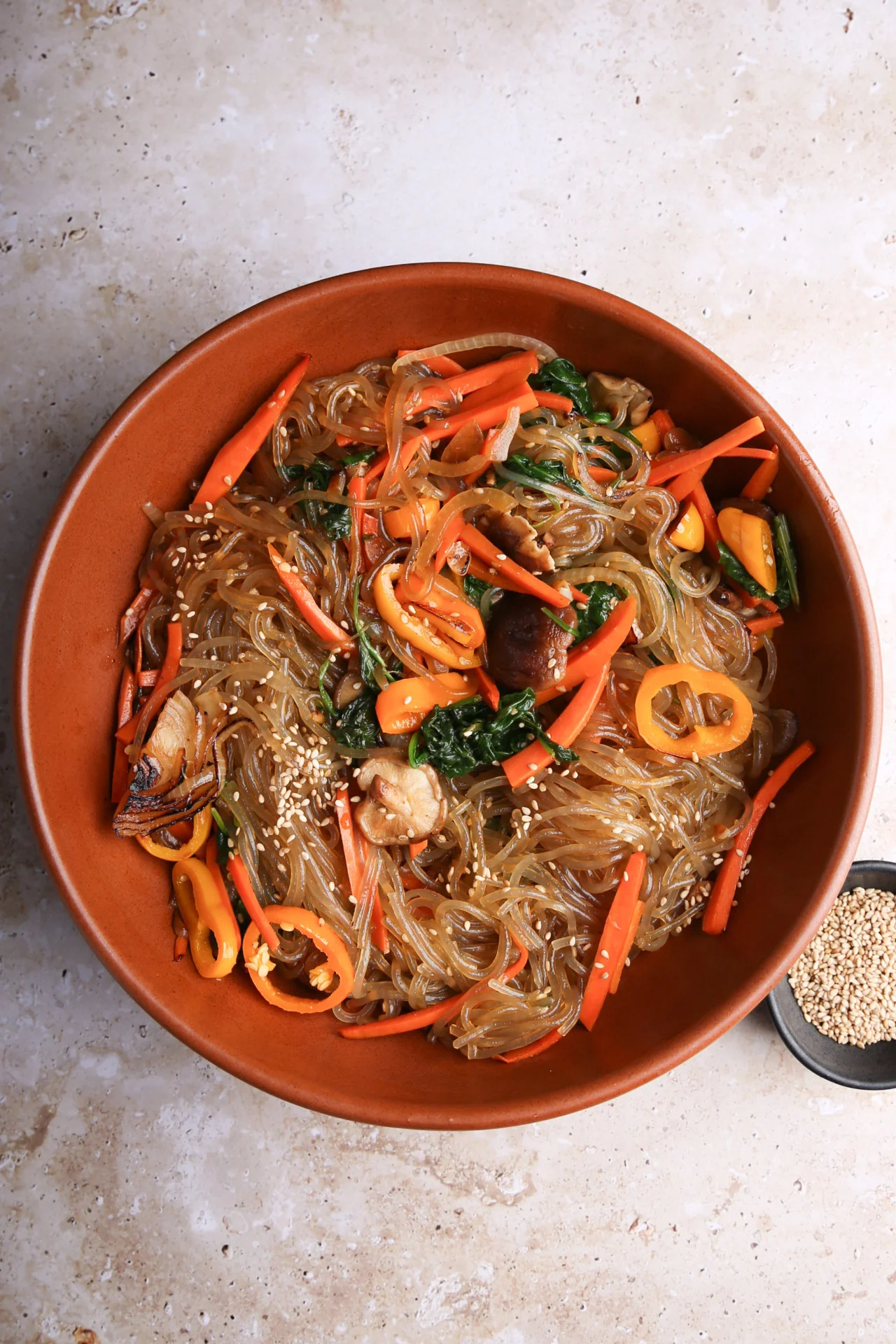
About this recipe
Japchae is one of those dishes that looks fancy but is actually really simple to make at home. It’s a Korean stir-fry made with sweet potato glass noodles, colorful vegetables, and a savory-sweet sauce that coats everything. The noodles are chewy, the veggies stay vibrant, and the whole thing comes together in about 30 minutes.
I started making this when I wanted to branch out from my usual Mexican recipes, and it became a regular in our rotation. It’s flexible; you can make it with beef, tofu, or just vegetables. It works as a side dish or a full meal. And it’s one of those recipes where the leftovers are just as good the next day, even cold.
Why you’ll love this recipe
- Ready in 30 minutes: faster than ordering takeout
- Naturally plant-based: no meat needed (but you can add it)
- Gluten-free adaptable: the noodles are made from sweet potato starch, and tamari swaps easily for soy sauce
- Beautiful on the table: all those colors make it look like you spent way more time than you did
- Great hot, warm, or cold: one of the few dishes that tastes good at every temperature
What is japchae?
Japchae (잡채) is a classic Korean dish made with stir-fried glass noodles and vegetables. The name literally means “mixed vegetables”—and originally it didn’t even include noodles. Over time, sweet potato glass noodles (dangmyeon) became the star of the dish.
In Korea, japchae is a staple at celebrations — birthdays, holidays, and New Year’s. But it’s also a totally normal weeknight dinner. It’s traditionally served at room temperature as part of a shared meal, which makes it perfect for potlucks and meal prep.
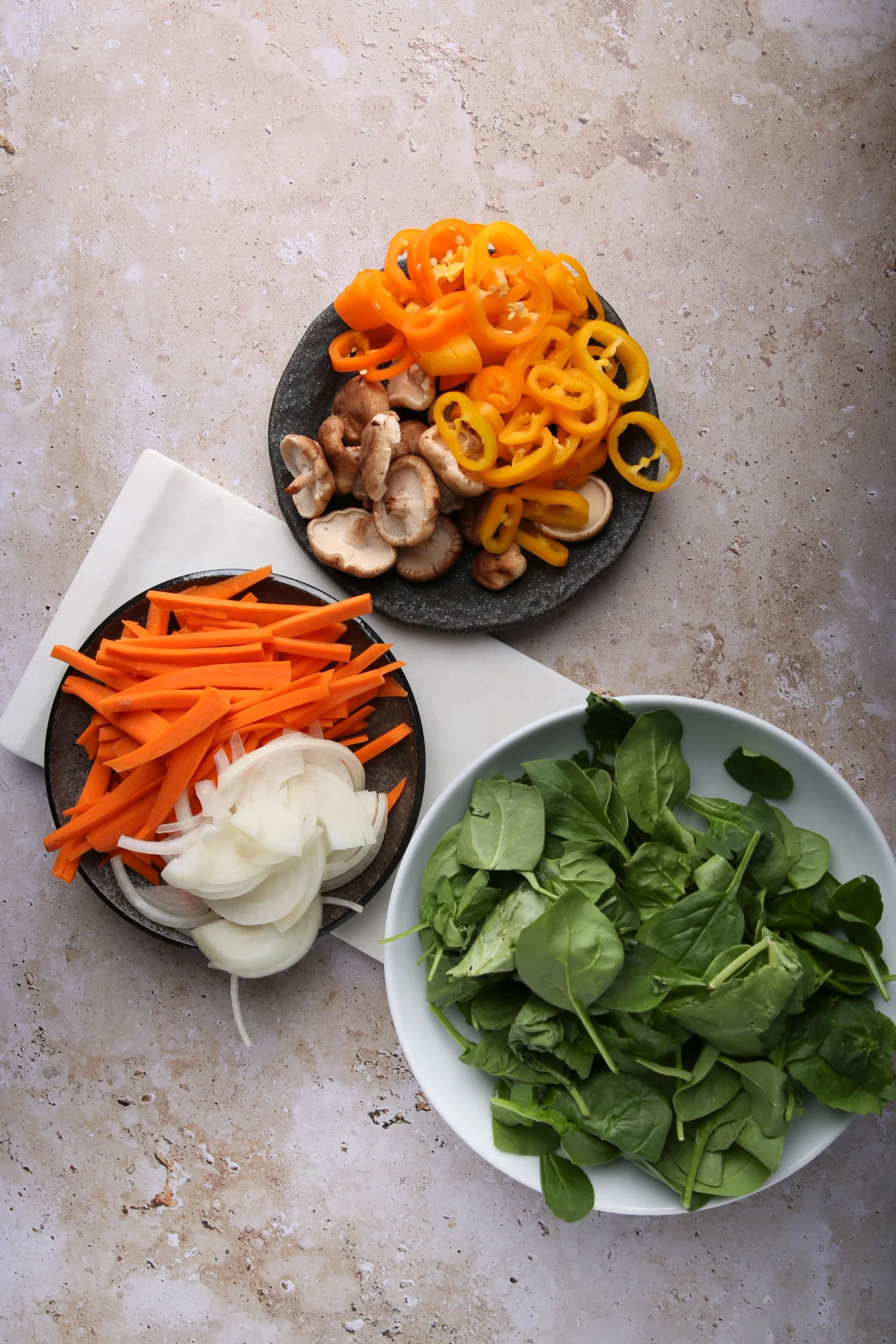
Ingredients
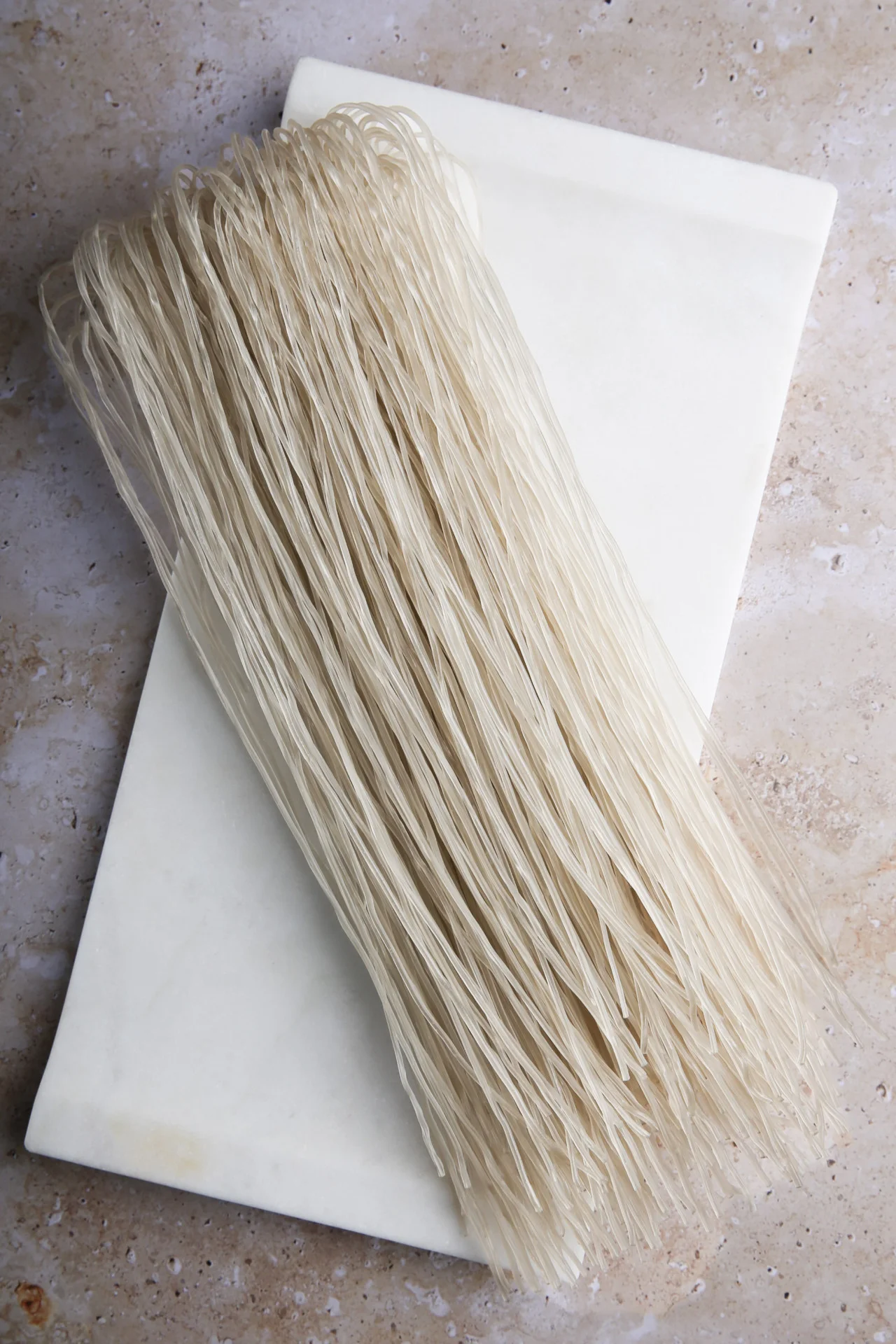
- Korean glass noodles (dangmyeon). Made from sweet potato starch. They’re chewy, translucent, and hold sauce like no other noodle. Find them at any Asian grocery store or online. Don’t substitute with rice noodles — the texture is completely different.
- Vegetables. Carrots, spinach, bell peppers, onions, and shiitake mushrooms. You want a mix of colors and textures. Swap in whatever you have — zucchini, snap peas, and bok choy all work.
- The sauce. Soy sauce, sesame oil, a little sugar, and minced garlic. That’s it. The magic is in the balance of savory, sweet, and nutty. See the full sauce breakdown below.
- Sesame seeds and green onions. For finishing. Non-negotiable — they pull the whole dish together.
- Protein (optional). Traditionally made with thinly sliced beef. For a plant-based version, use baked tofu or tempeh. Or skip it entirely — it’s great without.
The japchae sauce
Mix these together before you start cooking. You want it ready to go when the noodles hit the pan:
- 3 tablespoons soy sauce (or tamari for gluten-free)
- 2 tablespoons sesame oil
- 1 tablespoon sugar (or maple syrup)
- 2 cloves garlic, minced
- ½ teaspoon black pepper
Taste it before adding. It should be savory-sweet with a strong sesame flavor. Adjust the sugar or soy sauce to your preference. Some people add a splash of rice vinegar for brightness — I like it that way too.
How to make japchae
Step 1: Prepare everything first
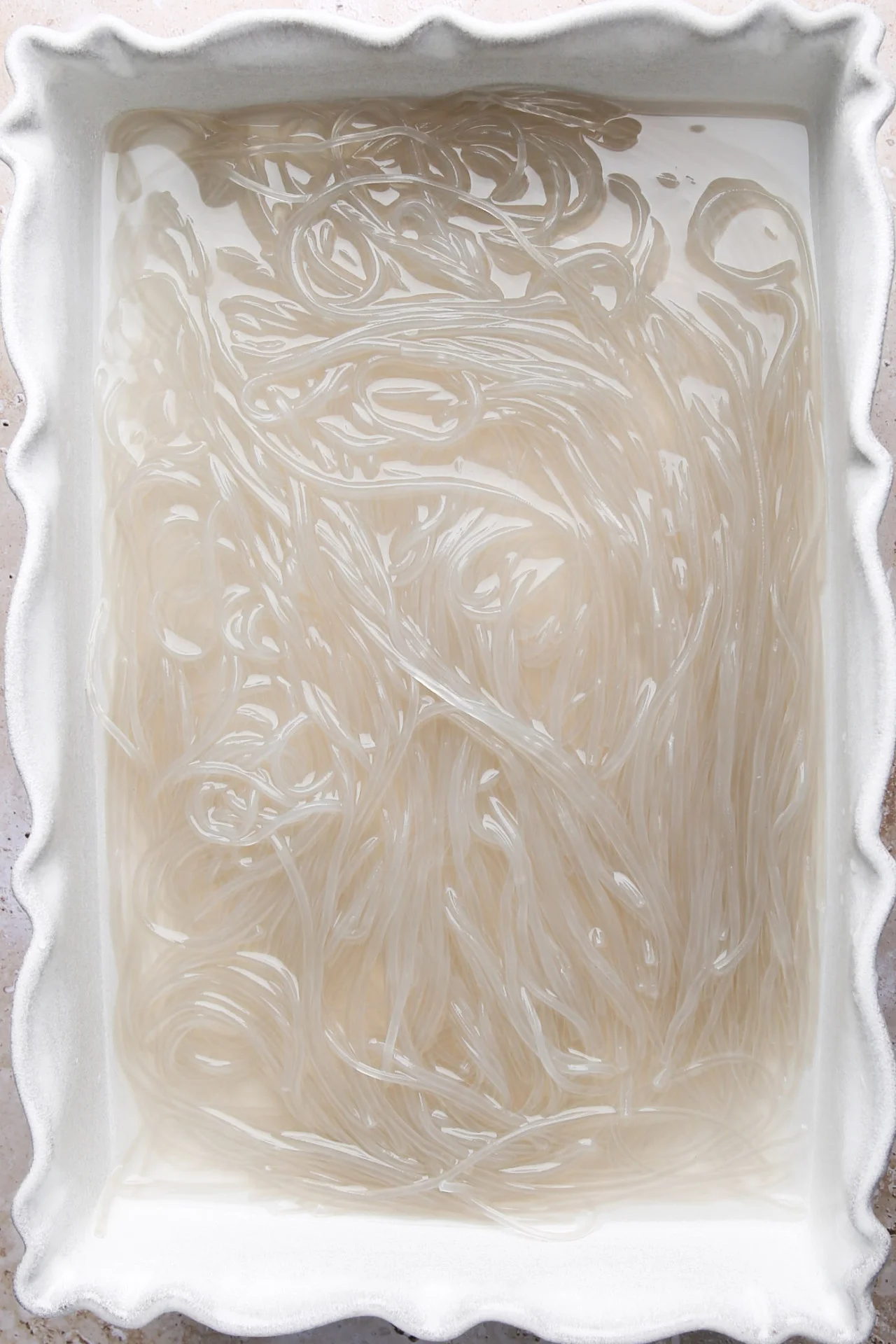
- Soak the noodles. Place the glass noodles in a large bowl and cover with boiling water. Let them sit for 15 minutes (or follow the package instructions). They should be soft but still chewy. Drain, rinse with cold water, and cut them with scissors into shorter lengths so they’re easier to eat and toss.
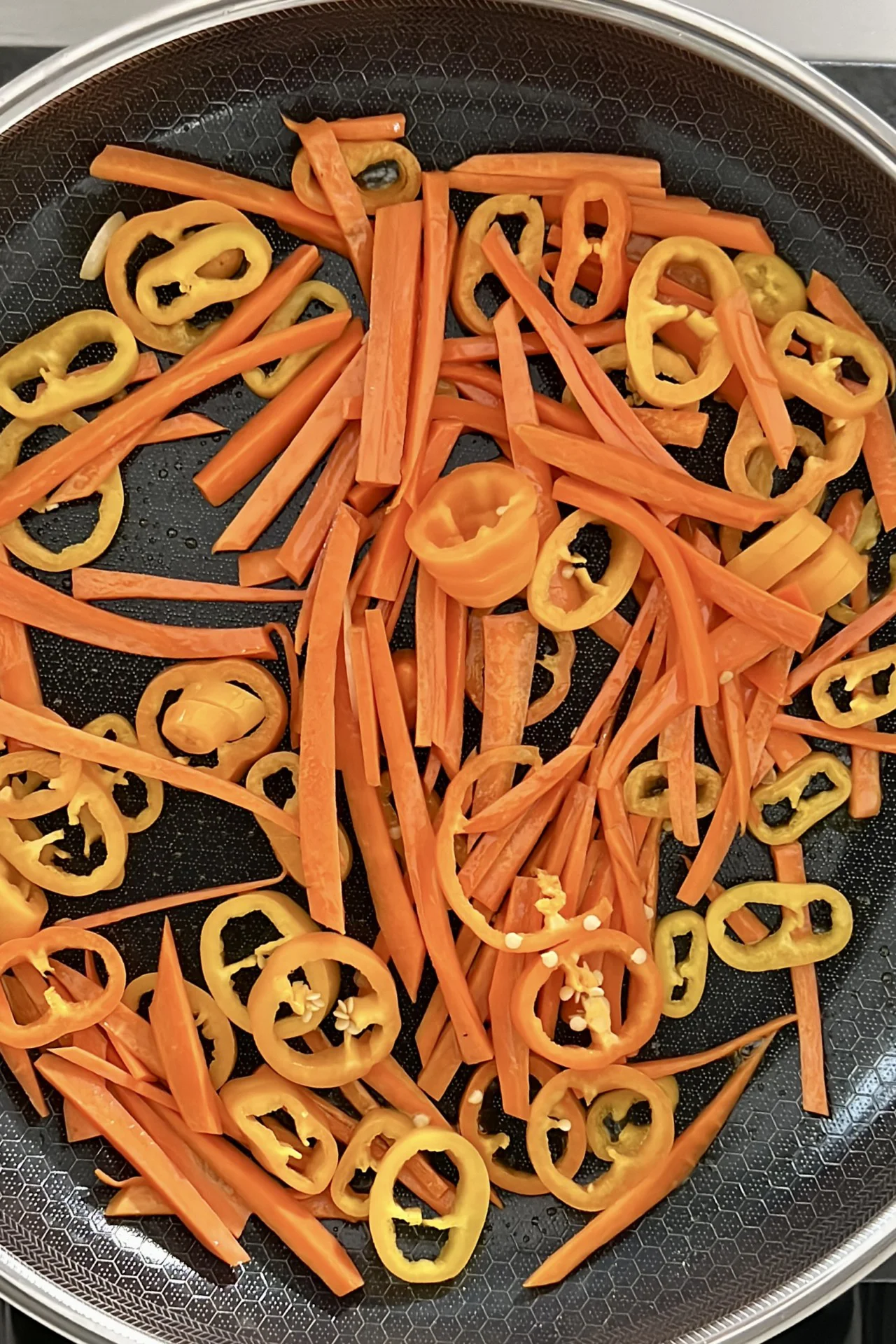
- Prep the vegetables. Julienne the carrots. Thinly slice the onions, bell peppers, and mushrooms. Keep the spinach whole — it wilts fast.
- Mix the sauce. Combine soy sauce, sesame oil, sugar, garlic, and pepper in a small bowl. Set it next to the stove.
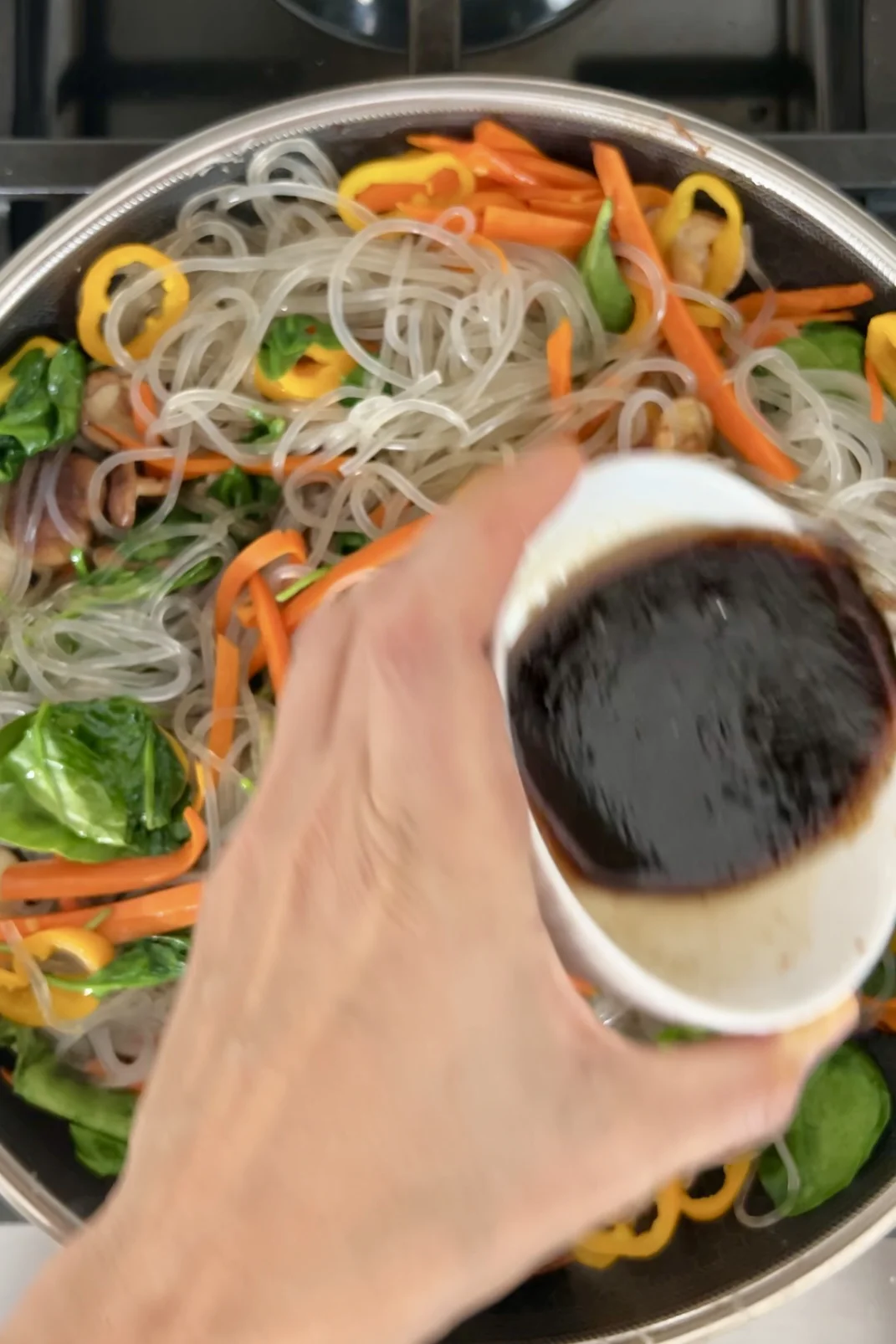
Step 2: Stir-fry in stages
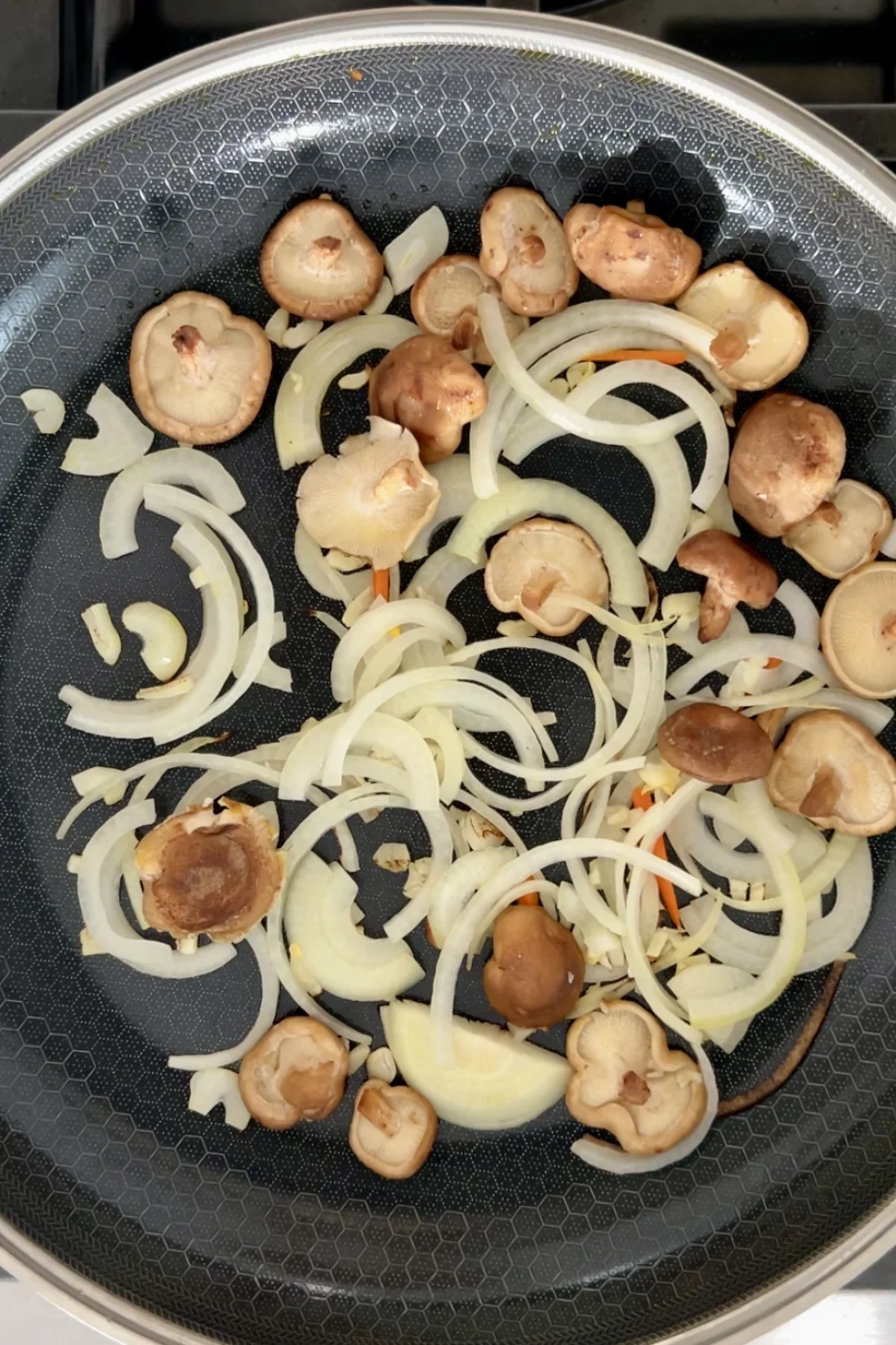
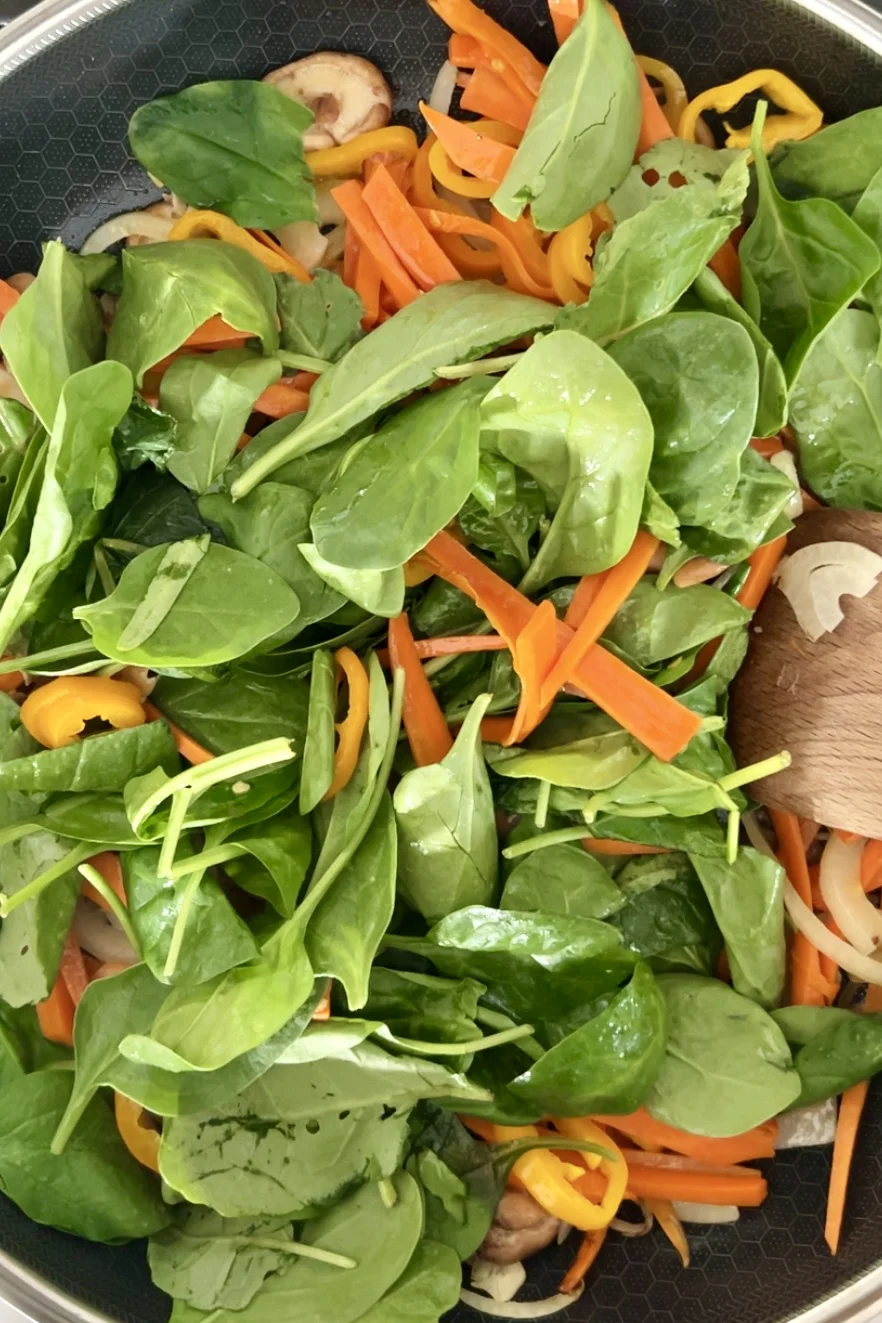
- Cook the vegetables. Heat a drizzle of oil in a large pan or wok over high heat. Stir-fry the carrots and bell peppers for 2 minutes. Add the onions and mushrooms, cook another 2 minutes. Add the spinach last — it wilts in about 30 seconds. Transfer everything to a plate.
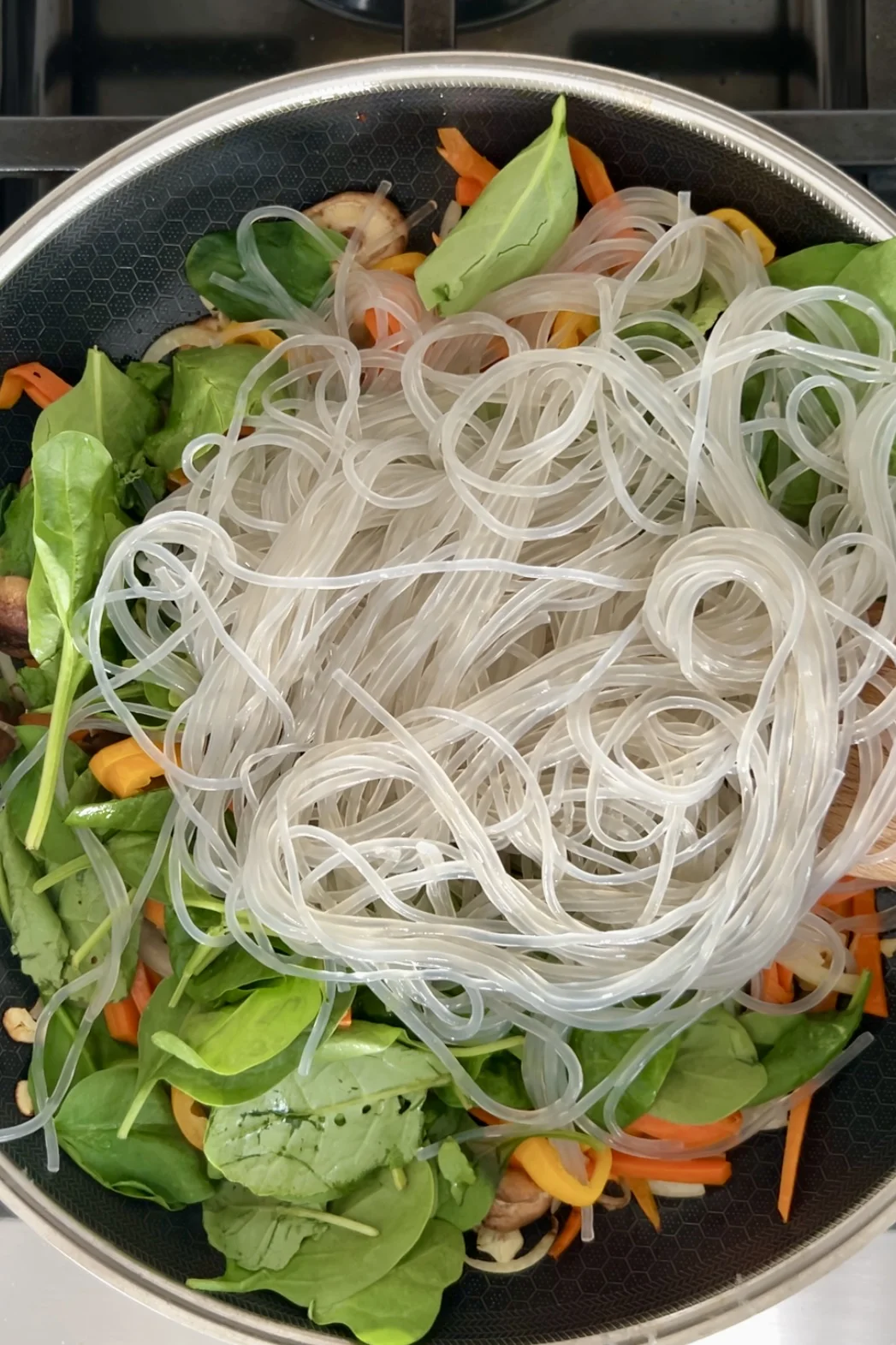
- Cook the noodles. In the same pan, add the drained noodles and pour the sauce over them. Toss with tongs for 2 to 3 minutes until the noodles absorb the sauce and turn glossy.
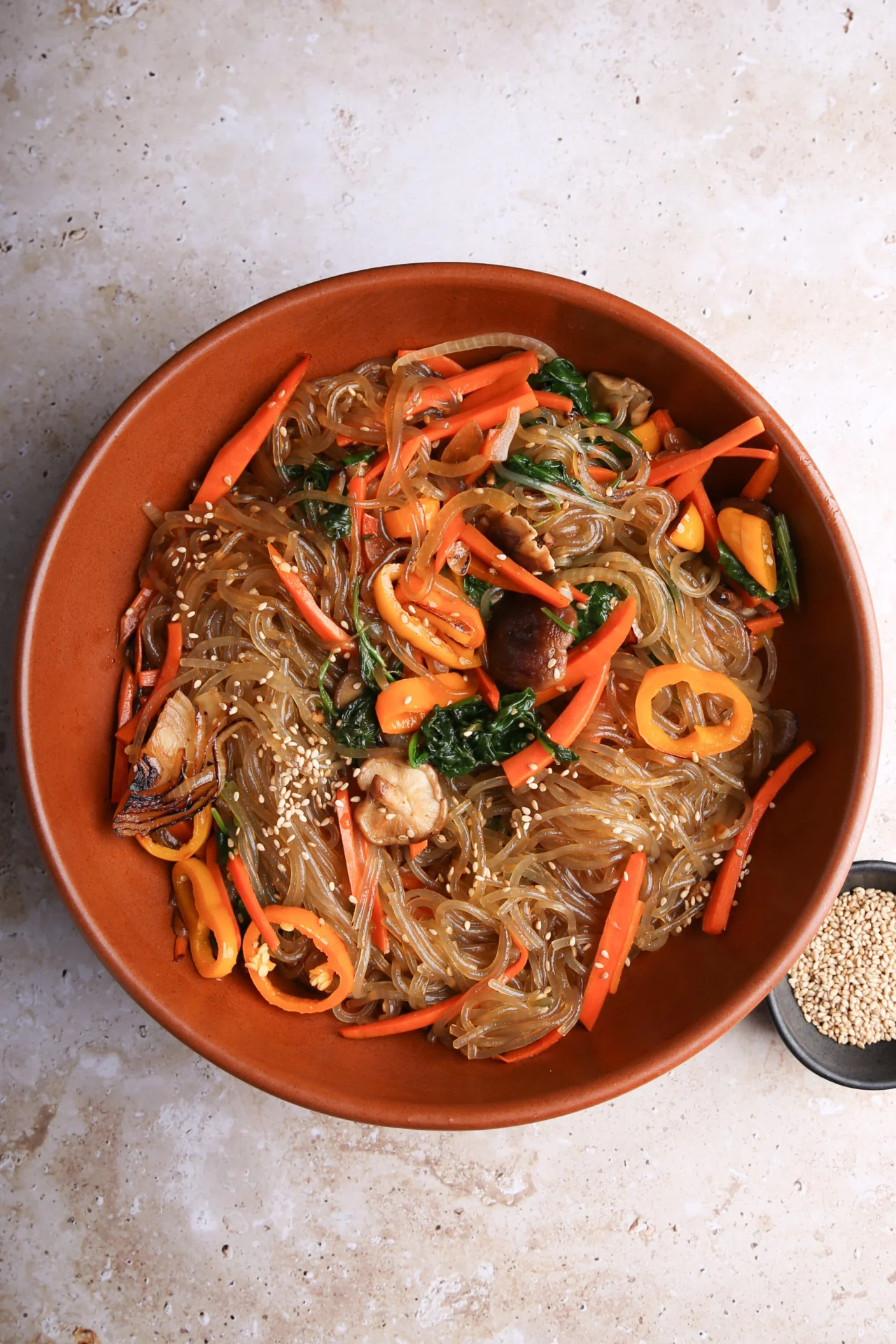
- Combine everything. Return the vegetables to the pan. Toss gently until everything is coated and mixed. Don’t stir too aggressively — you want the veggies to keep their shape.
- Finish. Sprinkle sesame seeds and sliced green onions on top. Taste and adjust — more soy if it needs salt, a pinch of sugar if you want it sweeter.
Tips for the best japchae
- Don’t boil the noodles. Soak them in hot water instead. Boiling makes them mushy. You want them chewy — that’s the whole point of glass noodles.
- Cut the noodles after soaking. Use kitchen scissors. Long noodles are hard to toss evenly with the vegetables and sauce.
- High heat, fast cooking. Stir-frying should be quick. If your veggies are sitting in a puddle, your pan isn’t hot enough.
- Cook vegetables separately if you can. It takes an extra minute but keeps each vegetable at its best — bright colors, slight crunch. If you’re short on time, cooking them all together works too.
- Taste the sauce before adding it. The balance of soy, sugar, and sesame should be savory-sweet. Adjust before it goes on the noodles.
- Room temperature is traditional. Don’t stress about serving it piping hot. Japchae is actually meant to be enjoyed warm or at room temperature.
Variations
- With beef. Marinate thin slices of sirloin in soy sauce, sesame oil, sugar, and garlic for 15 minutes. Stir-fry before the vegetables.
- With tofu. Press and cube firm tofu, then pan-fry until golden. Add it at the end when you combine everything.
- Spicy. Add gochujang (Korean chili paste) or a drizzle of chili oil to the sauce for heat.
- With egg. Scramble a couple of eggs in thin strips and lay them on top. Traditional and pretty.
- Swap the vegetables. Use whatever is in season — zucchini, snap peas, bok choy, broccoli. Japchae is flexible.
- Make it a full meal. Serve over a bowl of steamed rice. In Korea, this is called japchae-bap.
How to store and reheat
- Refrigerator. Store in an airtight container for up to 3 days. The noodles firm up a bit in the fridge — that’s normal.
- To reheat. Warm in a skillet over low heat with a small splash of water. Toss gently until heated through. Avoid microwaving too long — the noodles can go from chewy to mushy fast.
- Eat it cold. Japchae is legitimately good straight from the fridge. It’s a common way to eat it in Korea.
- Meal prep. Make a big batch on Sunday. It holds up well and tastes great all week.
Frequently asked questions
If you make this japchae, I want to hear about it. Leave a comment and tell me what veggies you used — or save it for the next time you want something different for dinner.
Stir-fried glass Noodles with Vegetables
Equipment
Ingredients
Instructions
- Soak the noodles in boiling water for 15 minutes, or according to package instructions, then rinse in cold water. Drain and set aside.
- Heat vegetable oil in a large pan or wok over medium heat. Add the carrot and bell pepper, and stir-fry for 5-7 minutes until the vegetables are tender but still crisp. Remove the vegetables from the pan and set aside.
- In the same pan, add the sliced onion, garlic, and mushrooms, and stir-fry for another 5-7 minutes. Return the carrots and bell peppers to the pan, then add the soaked glass noodles and spinach. Mix everything and cook until the spinach wilts.
- In a small bowl, combine the soy sauce, sesame oil, and sugar. Pour this sauce over the noodle mixture and toss everything together until the noodles are well coated and heated through.
- Finish by sprinkling sesame seeds on top, and enjoy the dish hot or at room temperature.
Notes
– Use sweet potato glass noodles (also called dangmyeon) for that chewy texture.
– Add blanched spinach and squeeze it to remove excess water.
– Include mushrooms like wood ear.
– Incorporate thinly sliced beef or a vegan substitute.
Nutrition
information
Nutritional information of this recipe is only an estimate, the accuracy for any recipe on this site is not guaranteed.

Hi, I’m Ale Graf!
I’m a Mexican home cook based in Texas and the voice behind AleCooks and Piloncillo & Vainilla.
I create easy, family-friendly recipes with Mexican roots and a plant-forward mindset—always flexible and made to bring people together. I’m also the co-author of Yo Cocino Latino and love helping home cooks feel more confident in the kitchen.
Come say hi on Instagram—I’d love to hear what you’re cooking.