About This Recipe
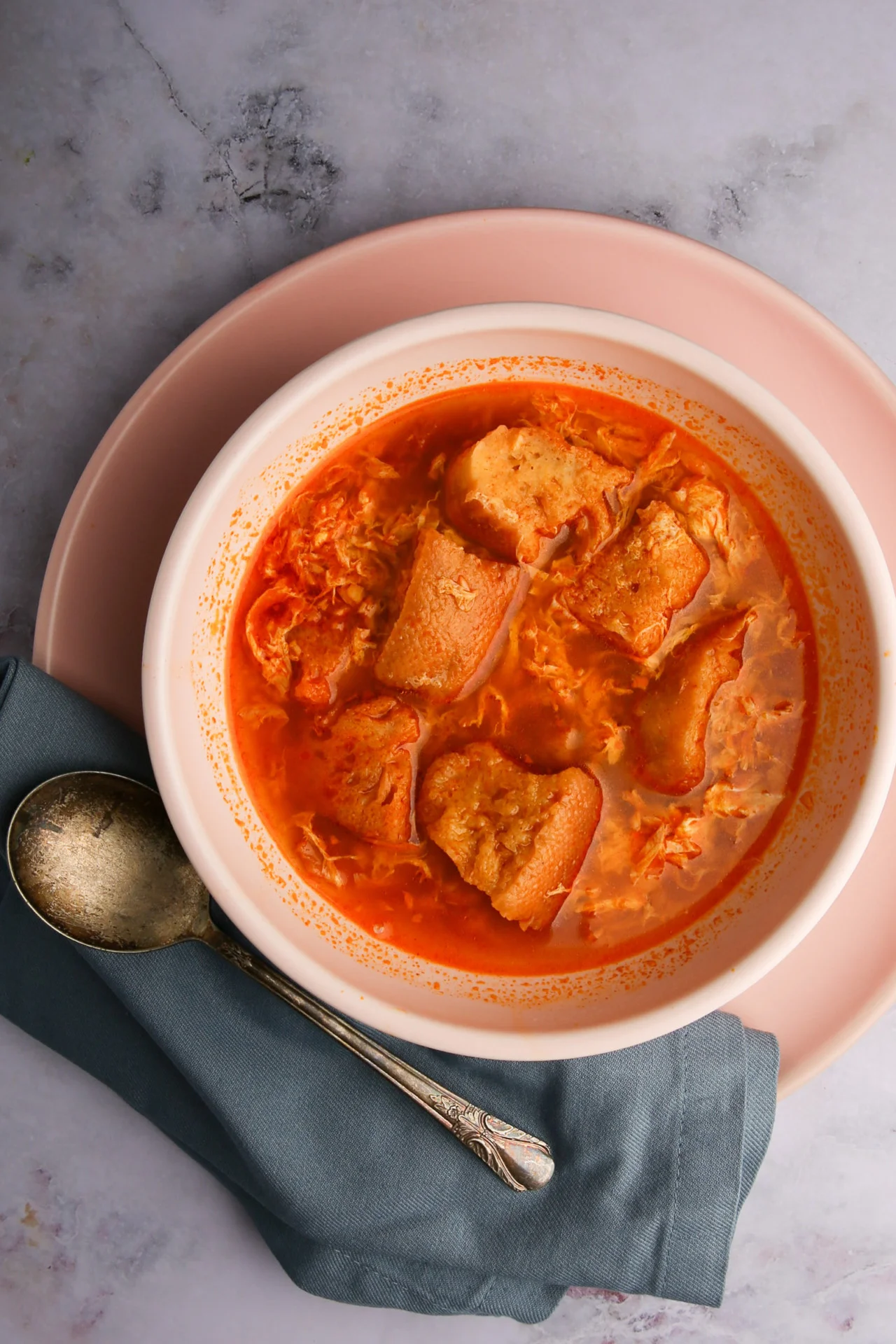
If there’s one soup that proves simple ingredients make the best meals, it’s sopa de ajo. This traditional Spanish garlic soup turns stale bread, garlic, and smoked paprika into a comforting, flavorful dish that’s rich but still light.
Sopa de ajo (also called sopa castellana) is one of the most iconic soups in Spanish cooking. It comes from Castilla y León, in central Spain, where it was originally a peasant dish made with whatever was on hand: day-old bread, garlic, olive oil, and water. It was also an essential source of nourishment after the Spanish Civil War, when rations were scarce and stale bread was often all there was. In some parts of Spain it is traditionally eaten on the morning of Good Friday.
This is peasant food at its best. A dish made with pantry staples, perfect for chilly days or when you want something warm but not heavy. And if you don’t have stale bread? No worries, I’ve got you covered.
Ingredients
- Garlic. A whole head, chopped. This is garlic soup, so don’t hold back. Chop it in the food processor to save time, but please do not use store-bought pre-chopped garlic. Fresh garlic makes all the difference here.
- Stale bread. Baguette works best, but sourdough or country bread also work. The dry bread soaks up the broth and thickens the soup. If you don’t have stale bread, toast fresh bread in the oven at 300°F for 10 to 15 minutes.
- Smoked paprika. This is what gives sopa de ajo its signature smoky, brick-red color. Use Spanish pimentón if you can find it. Sweet or bittersweet are both great. Make sure your paprika is fresh; old paprika loses its punch.
- Olive oil. Spain produces more olive oil than any other country in the world. Use a good quality extra virgin olive oil here. It’s one of only a few ingredients, so it matters.
- Eggs. Optional. You can skip them entirely for a vegan version, or add them for a heartier meal. More on egg methods below.
- Water or broth. Start with 6 cups of water or vegetable broth and add more if needed. It all depends on how much liquid the bread absorbs.
How to Add the Eggs
There are a few traditional ways to add eggs to sopa de ajo. Pick the one you like best:
- Egg ribbons. Whisk the eggs and pour them into the hot soup with one hand while stirring with the other. This creates thin ribbons, similar to egg drop soup. This is the most common method.
- Poached on top. Crack a whole egg into each serving bowl, then ladle the hot soup over it. The heat poaches the egg gently. This is the most dramatic presentation.
- Skip them. For a vegan version, leave the eggs out entirely. The soup is just as delicious without them. You could also add soft tofu for protein (check out my Kimchi Soup Recipe for that idea).
Tips for the Best Sopa de Ajo
- Cut the bread into small pieces. They will absorb liquid and soften. Smaller pieces give a smoother texture; leave them chunkier for a more rustic feel.
- Don’t burn the paprika. Add the smoked paprika after you take the pan off the heat briefly, then stir it in. Burnt paprika turns bitter fast.
- Use fresh garlic only. Pre-chopped garlic from a jar has a completely different flavor. Chop a whole head in the food processor if you want to save time.
- For a heartier meal, serve with a poached egg on top instead of stirring in whisked eggs.
- Adjust the broth. Start with 6 cups and add more as the bread absorbs liquid. Some people like a thick, porridge-like sopa de ajo; others prefer it more brothy.
Variations
- Vegan. Skip the eggs and use vegetable broth or water. The soup stands on its own.
- With ham. Traditional sopa de ajo in Spain often includes jamón serrano. If you eat meat, fry diced ham in the olive oil before adding the garlic. Sprinkle the crispy pieces on top when serving.
- Gluten free. Use gluten-free bread. The rest of the ingredients are naturally gluten free.
- Extra herbs. A bay leaf simmered in the broth or a sprinkle of fresh parsley on top are traditional additions, though most versions keep it simple.
- Croutons instead of soaked bread. If you don’t love the texture of soggy bread, toast the bread cubes separately and add them on top when serving for a crunchy contrast.
How to Serve Sopa de Ajo
- A slice of crusty bread for even more texture.
- A simple green salad on the side.
- A glass of Spanish wine. A light red or crisp white pairs beautifully.
Storage
Sopa de ajo keeps in the fridge for up to 3 days. The bread will continue to absorb liquid, so the soup will thicken as it sits. Add a splash of water or broth when reheating. Do not freeze this soup; the bread texture does not hold up well after thawing. If you made a version with eggs, store the soup without the eggs and add fresh eggs when you reheat.
More Comforting Soups
- Kimchi soup. Spicy, warming, and ready in minutes.
- Vegetable broth from scraps. The base for any great soup.
- No-knead 3-ingredient bread. Make your own bread, let it go stale, and use it for this soup.
Frequently Asked Questions
Spanish Garlic Soup
Equipment
- 1 Soup pot
Ingredients
- 6 oz stale bread about 2 cups, cut into small pieces
- ½ cup extra virgin olive oil
- 1 head garlic peeled and chopped (store-bought peeled garlic works great)
- 1 ½ tbsp smoked paprika
- 6-8 cups water
- 2 tsp salt
- 2 tbsp sherry vinegar
- 2 eggs whisked (optional)
- Chopped fresh parsley optional, for garnish
Instructions
- If your bread isn’t stale, toast it in the oven at 300°F for 10-15 minutes until dry and slightly golden. Baguette works great for this, but any rustic bread will do.
- Heat ½ cup of olive oil in a heavy-bottomed pot over medium heat. Add the bread pieces and fry them, stirring occasionally, until golden and crisp. This step is key—it deepens the flavor and gives the soup its rich texture. Once browned, remove the bread from the pot and set aside.
- Wipe the bottom of the pot clean, then add 1 extra tablespoon of olive oil along with the chopped garlic and a pinch of salt. Cook over low heat until the garlic softens but doesn’t brown. The goal is to mellow out the sharpness and bring out the garlic’s natural sweetness.
- Once the garlic is soft, stir in the smoked paprika and cook for 30 seconds. This helps bring out the smoky depth that makes this soup so special.
- Pour in 6 cups of water (start with this amount; you can always add more) and return the fried bread to the pot. Let it simmer gently for 10-15 minutes, stirring occasionally. The bread will absorb the broth, thickening the soup. If it gets too thick, add more water until you reach your desired consistency.
- Stir in sherry vinegar to balance the richness. Don’t skip this step—the acidity ties everything together and gives the soup a well-rounded flavor.
- For a more traditional version, slowly drizzle the whisked eggs into the soup while stirring vigorously. This creates delicate egg ribbons throughout the broth, similar to egg drop soup. If you prefer, you can serve the soup with a poached egg on top instead.
- Ladle the soup into bowls, drizzle with extra olive oil, and, if you like, finish with a sprinkle of fresh parsley. Serve warm.
Notes
Nutrition
information
Nutritional information of this recipe is only an estimate, the accuracy for any recipe on this site is not guaranteed.

Hi, I’m Ale Graf!
I’m a Mexican home cook based in Texas and the voice behind AleCooks and Piloncillo & Vainilla.
I create easy, family-friendly recipes with Mexican roots and a plant-forward mindset—always flexible and made to bring people together. I’m also the co-author of Yo Cocino Latino and love helping home cooks feel more confident in the kitchen.
Come say hi on Instagram—I’d love to hear what you’re cooking.