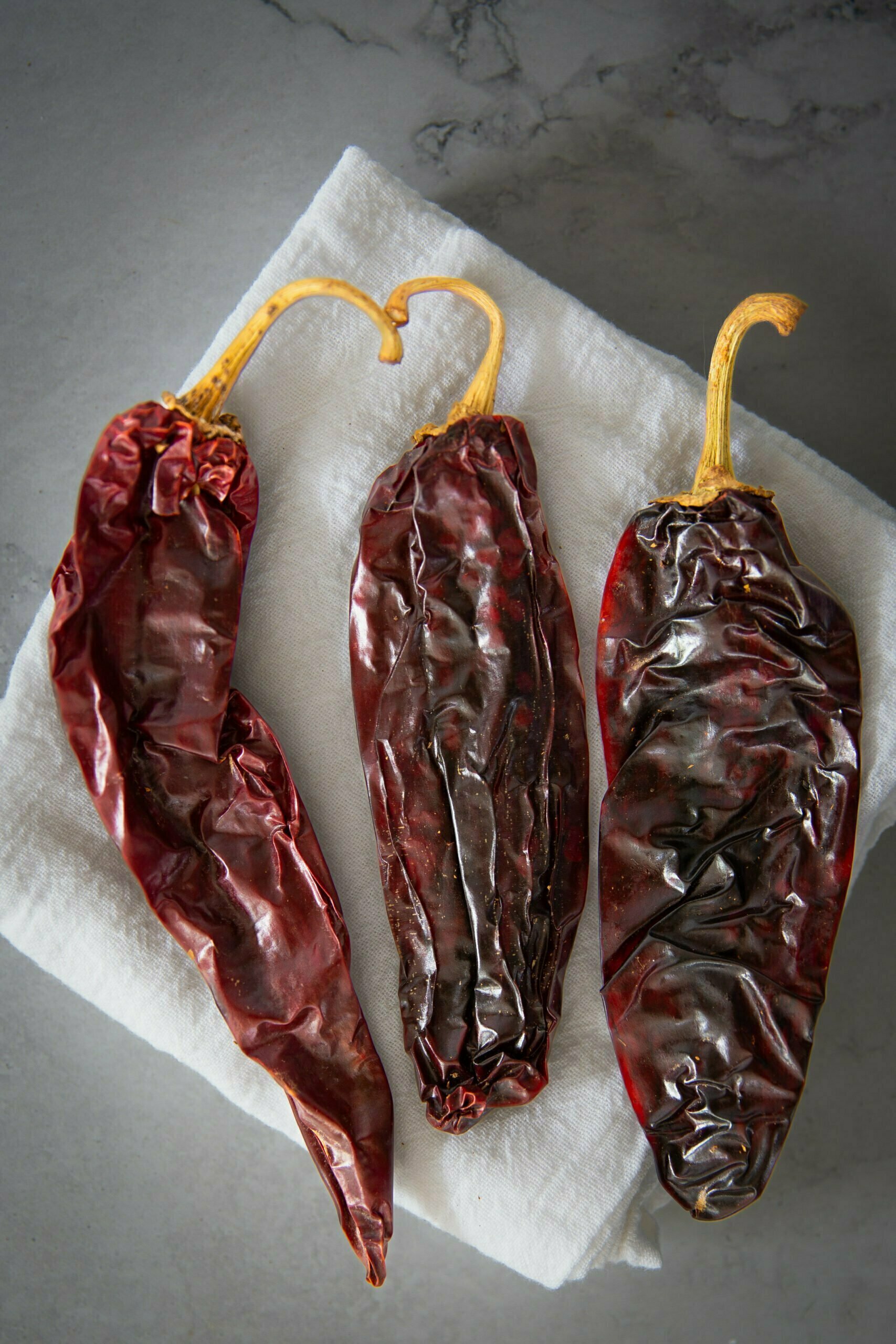
What Is Chile Guajillo?
Chile guajillo is the workhorse of Mexican dried chiles — and probably the one you’ll reach for most often once you know it. It’s the second most-used dried chile in Mexico (after ancho), and for good reason: it has a deep, fruity-earthy flavor, gorgeous red color, and mild heat that builds flavor without overpowering a dish.
When fresh, this chile is called mirasol (“looking at the sun”) because the peppers grow pointing upward on the plant. Once dried, it becomes the guajillo — smooth, leathery, and deep red. It’s larger and milder than chile puya, and less smoky than chipotle. In English, it’s simply called “guajillo chile.”
If you’ve ever had a good pozole rojo, enchiladas rojas, or birria, you’ve tasted guajillo. It’s the backbone of countless Mexican salsas, stews, and marinades — and it has been cultivated in Mexico since pre-Hispanic times.
What Does Chile Guajillo Taste Like?
Guajillo chiles have a complex, layered flavor that’s hard to replicate:
- Fruity and slightly sweet — hints of berry and dried cranberry
- Earthy and warm — like sun-dried tomatoes with a mild smokiness
- Tannic — a subtle dryness similar to green tea or red wine
- Mild heat — present but gentle, never aggressive
This is exactly why guajillo is used more for flavor and color than for spice. It adds depth and a beautiful red tone to sauces without making them too hot.
How Spicy Is Chile Guajillo?
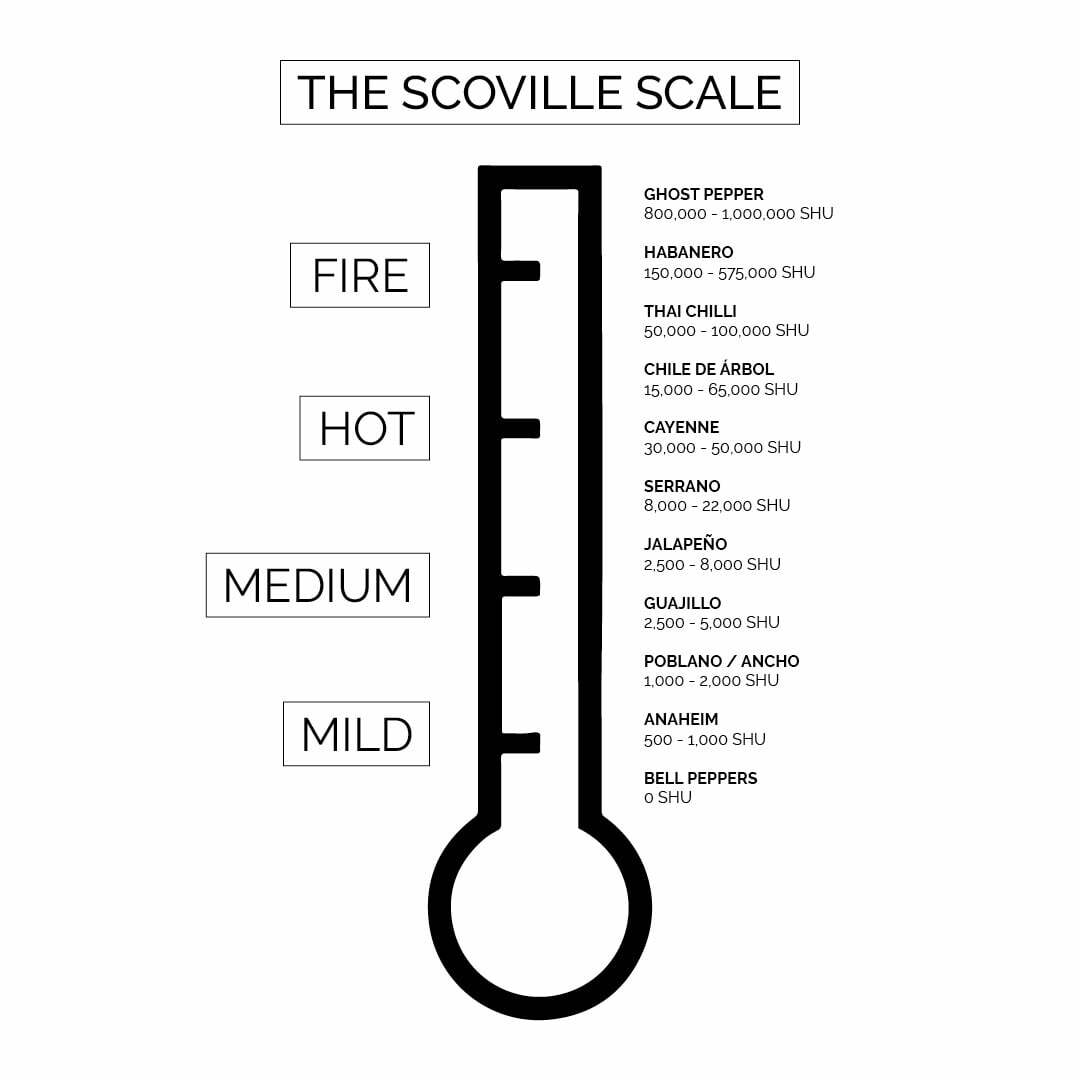
Guajillo chiles are mild — 2,500 to 5,000 Scoville Heat Units (SHU). For reference:
- Poblano / Ancho: 1,000–1,500 SHU (milder)
- Guajillo: 2,500–5,000 SHU
- Chile Puya: 5,000–8,000 SHU (similar look, spicier)
- Chile de Árbol: 15,000–30,000 SHU (much hotter)
- Habanero: 100,000–350,000 SHU
If you can handle a mild jalapeño, you can handle a guajillo easily. It’s a great starting point if you’re new to cooking with dried chiles.
Guajillo vs. Puya vs. Cascabel
These three chiles are often confused because they’re related — all come from the mirasol family. But they’re not interchangeable:
- Chile Guajillo — Large (3–5 inches), smooth skin, mild heat (2,500–5,000 SHU). The most common of the three. Used for sauces, stews, and marinades.
- Chile Puya — Smaller, thinner, and noticeably spicier (5,000–8,000 SHU). Sometimes called “guajillo puya.” Use it when you want more kick with a similar flavor.
- Chile Cascabel — Round, small, rattles when you shake it (the seeds inside). Mild heat, slightly fruitier and nuttier. Great in table salsas.
Tip: If a recipe calls for guajillo and you want more heat, swap half the guajillos for puya chiles. Same flavor family, more fire.
Substitutes for Guajillo Chiles
If you can’t find guajillos, here are the best alternatives:
- New Mexico chiles — Closest in flavor and heat. Slightly sweeter, less fruity. Best 1:1 substitute.
- Ancho chiles — Milder and more chocolatey, but work well in sauces. Use a mix of ancho + a small chile de árbol for heat.
- Pasilla chiles — Darker, slightly more bitter. Work in mole and dark sauces.
- California chiles — Very mild, similar color. Good for color, but you’ll need to add more for flavor.
- Guajillo chile powder — Use 1 tablespoon per 2–3 whole dried chiles if you’re in a pinch.
What I’d do: Mix 2 New Mexico chiles with 1 chile de árbol for every 3 guajillos. That gets you closest in both flavor and heat.
How to Buy and Store Guajillo Chiles
Where to Buy
- Mexican/Latin grocery stores — Best quality and freshest. High turnover means you get newer stock.
- Well-stocked supermarkets — Check the international or Latin foods aisle, or the produce section near dried herbs.
- Online — Amazon and specialty spice shops carry them. Look for Mexican-grown chiles specifically.
How to Choose Good Ones
- Color: Deep red to maroon. Avoid faded, dusty, or overly brown chiles.
- Texture: Smooth, shiny skin. Should feel leathery but flexible — not brittle or crumbly.
- Smell: Should have a faint fruity, earthy aroma. No musty or stale smell.
- No holes: Small holes can mean insect damage.
How to Store
- Room temperature (dry climate): In a sealed bag or airtight container, in a cool, dark place. Lasts up to 1 year.
- Hot / humid climate: Use vacuum-sealed bags or airtight containers. Keep away from heat and moisture.
- Freezer: Both dried and rehydrated chiles freeze well for up to 6 months.
- Rehydrated chiles: Fridge for up to 4 days. Freezer for up to 6 months.
Tip: Dried guajillos stored properly can last up to 2 years, but they’re best within the first year when their oils are most potent.
How to Rehydrate Guajillo Chiles
Rehydrating dried chiles unlocks their flavor and makes them soft enough to blend into sauces, salsas, and marinades. Here’s how:
- Clean. Wipe the chiles with a damp towel to remove any dust.
- Remove stems and seeds. Cut off the top, slice lengthwise, and shake out the seeds. Remove the veins too if you want even milder heat.
- Toast (optional but recommended). Heat a dry skillet over medium heat. Press each chile flat and toast 15–30 seconds per side until fragrant and slightly darkened. Don’t burn them — burnt chiles taste bitter.
- Soak. Place the chiles in a bowl and cover with boiling water. Let sit for 15–20 minutes until completely soft and pliable.
- Drain and use. Blend with some of the soaking liquid for sauces, or chop and add directly to stews.
Microwave shortcut: Place seeded chiles in a microwave-safe bowl with water. Microwave on high for 3 minutes, then cover and let sit until soft.
Save the soaking liquid. It’s full of flavor — use it as part of your sauce or broth.

Recipes with Chile Guajillo
Guajillo chiles are used in everything from everyday salsas to complex moles. Here are some of my favorite ways to cook with them:
- Chile Colorado with Potatoes — A rich, deep-red guajillo sauce over tender potatoes. This is the recipe that shows off what guajillo can do.
- Garlic Mushroom Pasta with Chile Guajillo — A non-traditional twist: guajillo meets Italian pasta. One of my favorites.
- Salsa Tlaquepaque — A unique salsa with coffee and guajillo. Bold, complex, unforgettable.
- Crema de Frijol — Creamy Mexican bean soup topped with crispy guajillo chile chips.
- Chipotles in Adobo — Guajillo is part of the adobo sauce base.
Classic Mexican dishes that use guajillo: pozole rojo, birria, enchiladas rojas, tamales rojos, fideo seco, chilaquiles rojos, tacos al pastor marinade, pambazos, and many moles.
Health Benefits of Guajillo Chiles
- Vitamin A — Important for eye health and immune function. Dried chiles are especially concentrated.
- Vitamin C — Even in dried form, guajillos retain some vitamin C.
- Vitamin B6 — Supports brain health and metabolism.
- Iron — A trace amount, but every bit helps in a plant-based diet.
- Antioxidants — Capsaicin and carotenoids, which give the chile its red color, are powerful anti-inflammatory compounds.
Guajillo chiles won’t replace a multivitamin, but they’re a nutrient-dense way to add flavor to your cooking — especially compared to salt or sugar.
Frequently Asked Questions
You Might Also Like
- Chile Colorado with Potatoes — the best showcase for guajillo flavor
- Chipotles in Adobo Sauce — another essential dried chile technique
- Salsa Tlaquepaque — bold salsa with guajillo and coffee
- Crema de Frijol — topped with guajillo chile chips
⭐ Found this guide helpful? Leave a rating and a comment below — I’d love to hear how you’re using guajillo chiles!
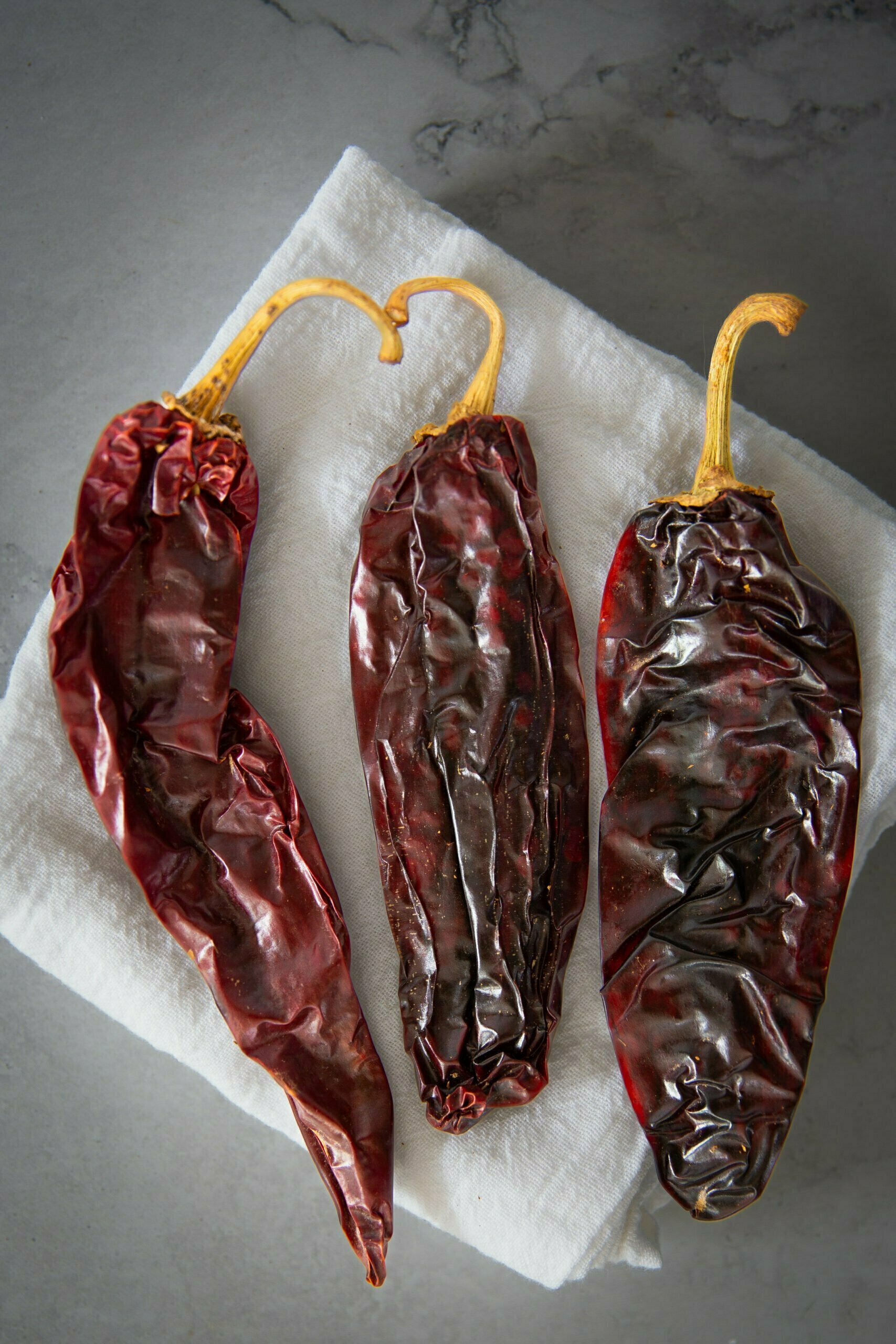
How to Rehydrate Guajillo Chiles
Ingredients
- Chile guajillo
Instructions
- Prepare the Chiles: Remove the stems and seeds by cutting off the top and shaking out the seeds. This will reduce bitterness and make the chiles easier to work with.Optional: Remove the veins if you prefer a milder flavor.
- Toast the Chiles: Heat a dry skillet over medium heat. Lightly toast the chiles for 15-30 seconds on each side, just until they become fragrant. This step intensifies the flavor, but be careful not to burn them as it can make them bitter.
- Soak the Chiles: Lightly toast the chiles for 15-30 seconds on each side, just until they become fragrant. This step intensifies the flavor, but be careful not to burn them as it can make them bitter.Add the toasted guajillo chiles and let them soak for 15-20 minutes, or until they’re soft and pliable.
- Drain and Use: Once rehydrated, drain the chiles and pat them dry with a paper towel.
Notes
Don’t burn the chiles when toasting — bitter taste is irreversible.
information
Nutritional information of this recipe is only an estimate, the accuracy for any recipe on this site is not guaranteed.

Hi, I’m Ale Graf!
I’m a Mexican home cook based in Texas and the voice behind AleCooks and Piloncillo & Vainilla.
I create easy, family-friendly recipes with Mexican roots and a plant-forward mindset—always flexible and made to bring people together. I’m also the co-author of Yo Cocino Latino and love helping home cooks feel more confident in the kitchen.
Come say hi on Instagram—I’d love to hear what you’re cooking.